
How the World Bank is Helping Nigeria Build a National Mobility Machine
- Resources
- February 12, 2026
- No Comment
- 717
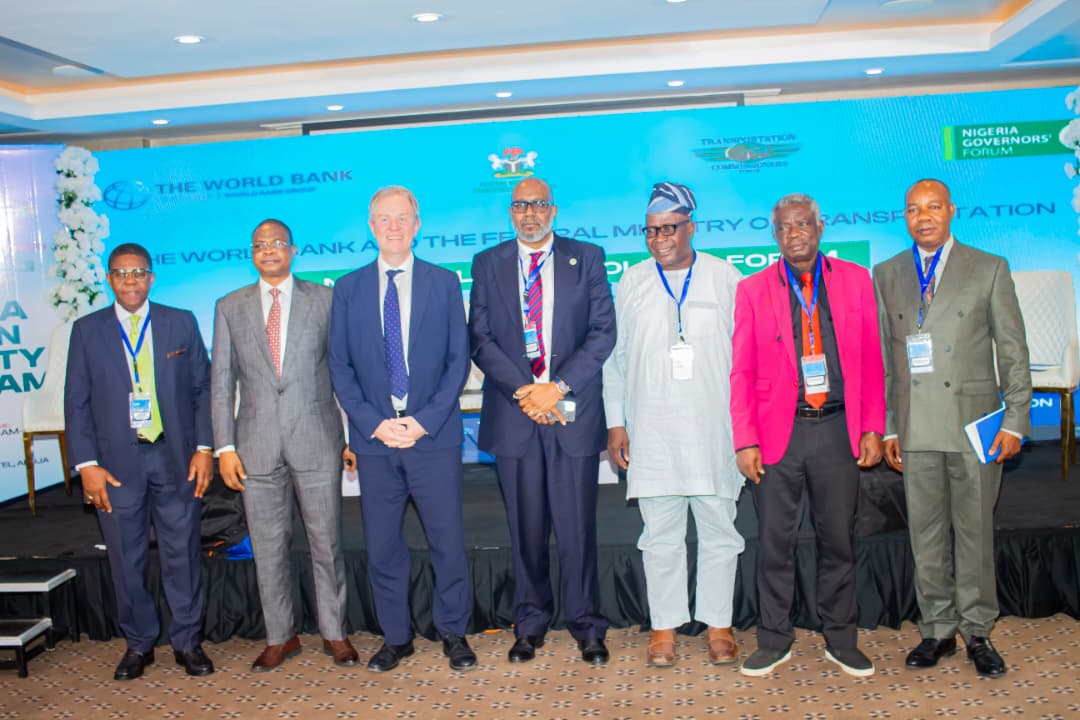
A decisive step forward in the transformation of Nigeria’s urban transportation landscape was taken at the 2nd National Stakeholders’ Forum on the National Urban Mobility Program, a high-level gathering on 22nd January, 2026 powered by the World Bank and held in Abuja.
This pivotal event, convened jointly by the Federal Ministry of Transportation, the Nigeria Governors’ Forum, and the Nigeria Transportation Commissioners Forum, marked the transition from diagnostic analysis to the concrete design of a coordinated national response to the country’s profound mobility challenges. The forum brought together the country’s leading transportation policymakers, state commissioners, international experts, and development partners, all united by a shared recognition that the sustainability, efficiency, and inclusivity of urban mobility are fundamental to Nigeria’s future economic competitiveness and social well-being.
The atmosphere in Abuja was one of collaborative urgency, set against a backdrop of staggering demographic reality. As emphasized by World Bank Country Director Mathew Vergis in his opening address, Nigeria stands at a critical juncture. With its urban population projected to more than double to 264 million by 2050, the strain on cities is already acute. Commuters in major urban areas lose up to four hours daily to congestion, a direct drain on national productivity, while low-income households spend an unsustainable portion of their earnings on transport. Vergis framed the World Bank’s role as that of a committed long-term partner, ready to move beyond analysis and provide the blend of financing, technical expertise, and convening power necessary to translate ambition into actionable projects that create jobs and foster inclusive growth.
This sentiment was echoed by Engineer. Olugbenga Dairo, Chairman of the Nigeria Transportation Commissioners Forum and Commissioner for Transport in Ogun State, who in his welcome remarks underscored that the very existence of this detailed forum was a result of the World Bank’s support, initiated after a promising first meeting in September 2024. He called on state officials to take ownership of the emerging National Urban Mobility Program, leveraging the expertise made available through this partnership to move from policy to implementation.
The technical cornerstone of the day was the comprehensive presentation by World Bank specialists Elkin Bello and Rakesh Tripathi, who unveiled the proposed architecture for the National Urban Mobility Program. Their diagnostic work confirmed the immense diversity of Nigerian cities, making a single, uniform solution impractical. In response, the program proposes a flexible, three-pillar framework designed to be nationally coordinated but locally executed. The first pillar focuses on capacity building and knowledge sharing, envisioning a national hub to foster peer learning and disseminate standards. The second pillar is dedicated to institutional strengthening and regulatory reforms, aiming to help states establish robust transport authorities and secure funding mechanisms. The third, and perhaps most critical pillar, tackles operationalization and financing, with a focus on developing bankable projects and blending public funds with private capital. A central innovation within this structure is a tiered, readiness-based approach that classifies cities into distinct categories.
Cities like Kano, beginning their reform journey, would receive support for foundational steps like agency setup and traffic management. Cities like Abuja, with basic institutions in place, would be aided in developing shovel-ready projects such as bus corridor expansions. Meanwhile, a city like Lagos, with mature systems, would be supported to implement complex, multimodal investments using advanced financing instruments like public-private partnerships. This nuanced model, inspired by successful international examples from Mexico, Colombia, and Morocco presented at the forum, ensures that support is tailored to local capacity, with a clear pathway for progression.
The perspective of state leadership was powerfully articulated by a senior representative of the Nigerian Governors’ Forum, who delivered the address on behalf of its Chairman, His Excellency Governor Abdulrahman Abdulrazaq. While welcoming the program’s ambitious design and its respect for the constitutional responsibilities of states, he introduced a necessary theme of implementation realism. He argued that urban mobility reform is deeply political, entangled in challenges of federal-state coordination, powerful transport unions, and persistent capacity gaps. His call was for crystal clarity on the financial terms of engagement, the balance between grants and loans, long-term maintenance responsibilities, and for the establishment of credible coordination mechanisms that move beyond mere dialogue.
This grounded perspective underscored that the program’s success hinges not just on technical design but on practical politics and sustained partnership. This view was enriched during a panel discussion featuring academia and practitioners. Scholars like Professor Samuel Odewumi stressed the urgent need to operationalize the existing National Transport Policy to provide a legal framework, while Professor Iyiola Oni argued for hyper-local diagnostics and the inclusion of rural transport linkages, emphasizing a bottom-up approach. Dr. Chinedum Elechi from the Federal Capital Territory Administration highlighted the ongoing transition in Abuja and pointed to the critical need to make transport investments financially viable to attract private capital.
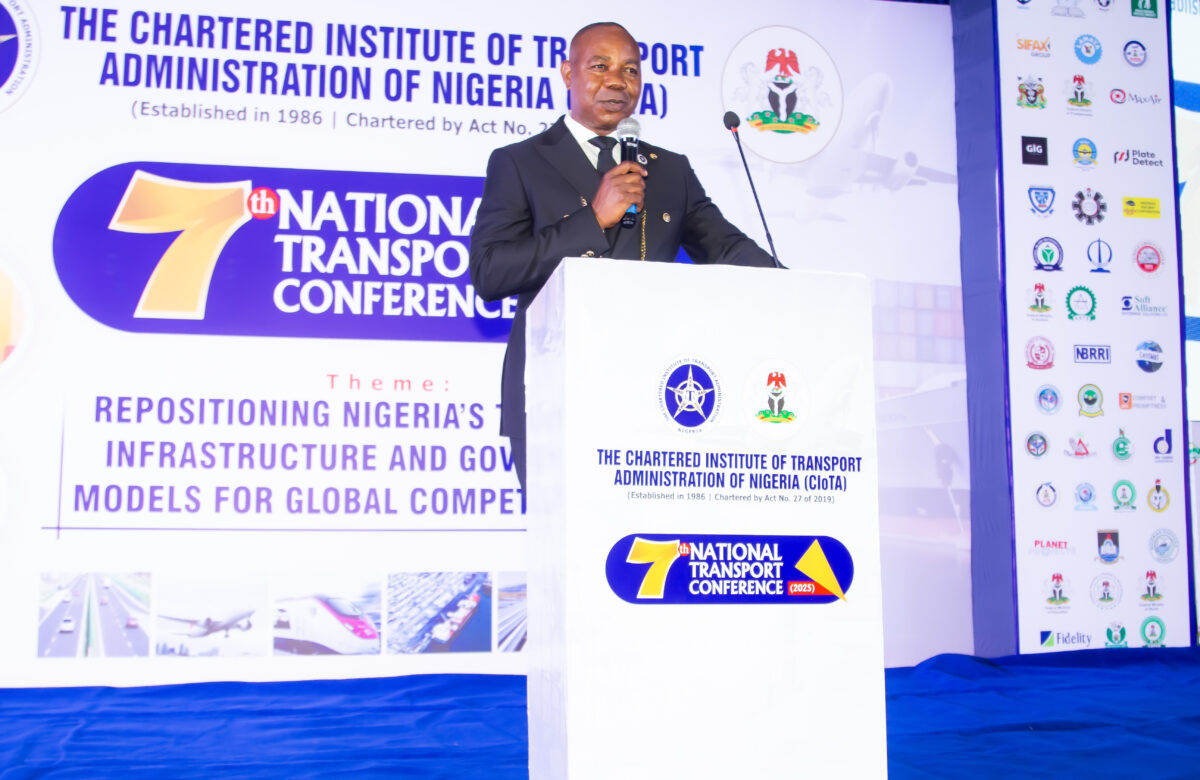
The forum reached its resonant climax with a compelling call to action from Prince Segun Ochuko Obayendo, National President of the Chartered Institute of Transport Administration. Framing the moment as a choice between action and complacency, he challenged the audience to reject the “ugly pictures” of the current reality. He outlined an unambiguous agenda: the creation of a National Coordinating Agency, the mandate for comprehensive state masterplans, the establishment of State Transport Metropolitan Authorities, and the formal integration of the informal transport sector. His declaration that all states must make transportation their number one agenda served as a powerful rallying cry, encapsulating the forum’s overarching message.
The collaborative spirit of this World Bank-powered event has clearly set a new trajectory, crystallizing into a series of concrete imperatives that must guide Nigeria’s path forward. The detailed architecture for the National Urban Mobility Program now provides a credible roadmap, but its success depends on executing key priorities that emerged with consensus from the forum. Central to this is the urgent need to establish a cohesive national transport architecture through a fortified partnership between the Federal Ministry of Transportation and the Nigeria Governors’ Forum, ensuring strategic alignment from the federal down to the local level.
This partnership must facilitate a decisive shift from diagnostics and dialogue to tangible implementation and on-the-ground impact. A critical component of this transition is the intentional strengthening of state-level institutions, equipping them with the authority, technical capacity, and sustainable funding mechanisms to lead local transformations. To systematically build this human capital, the proposal to establish a dedicated Urban Transport Academy gained traction, envisioned as a center of excellence to cultivate the next generation of planners, engineers, and policy experts.
Underpinning all these efforts must be a formalized system to institutionalize knowledge sharing and peer learning, creating platforms for successful states to mentor others and for common challenges to be addressed collectively. This requires a reimagined framework for federal and state coordination, one that genuinely embraces a bottom-up approach, respecting local context and ensuring solutions are shaped by those who understand the unique dynamics of their cities. The ultimate goal is a fundamental transition to a sustainable, efficient, and safe mobility system that reduces environmental impact and embraces modern technology.
Finally, and crucially, any national strategy must be inclusive. A defining takeaway was the unequivocal need to design a deliberate pathway to integrate the informal transport sector, the lifeblood of Nigerian mobility, into the formal economy, through regulation, incentives, and support that enhance livelihoods while improving service standards. The forum has provided the platform and the plan; the work of transforming Nigeria’s urban mobility landscape, and by extension its economic future, must now begin in earnest by acting on these foundational commitments.
– Olusemire Jegede