



Endless Uncertainty Over Auto Policy amidst stakeholders’ concerns
- Road
- August 6, 2025
- No Comment
- 489
By Lanre Abdul
Policy inconsistency, policy summersault or lack of policy has stunted the growth of the transportation sector as a sub-sector of the economy and the economy in general. Where the policy exists, implementation has often been an issue.
However, the lack of policy, despite years of outcry and agitation, remains a major obstacle to the growth of the transportation sector.
The automotive sector of any economy is a major contributor to the gross domestic product of such an economy but over time the auto sector in Nigeria has suffered due to the failure to implement the National Automotive Industry Development Plan (NAIDP) also known as auto policy.
The Auto Policy which has remained a draft for the past 10 years is an instrument for galvanising the growth and development of the auto industry; an instrument for vehicle affordability and has spelt out the development plan over a period of time and the expected transition to an eco-friendly and sustainable mobility.
But for over a decade, several efforts to transform the draft into a legal document have remained elusive due to the non-passage of the Auto Policy Bill which provides the legal and regulatory buffer for investors and original equipment manufacturers (OEMs) to set up assembly plants in Nigeria. The Bill, among others, also makes provision for auto finance scheme with a view to make acquisition of brand new vehicles seamless.
In 2017, the 8th Senate under Senator Bukola Saraki as Senate President passed the Auto Policy Bill into law.
Former Director-General of the National Automotive Design and Development Council (NADDC), Mr. Jelani Aliyu who was just appointed then was in Lagos where he revealed the passage of the Bill with so much excitement and expectation of what the passage of the Bill portended for the industry.
According to him, the NAIDP Bill would provide incentives for original equipment manufacturers (OEMs) to come into the country.
He said the OEMs like BMW, FORD, Toyota, among others have indicated interest in setting up plants in Nigeria and said the passage of the Auto Policy Bill would fast-track their coming into the country.
He said, “I am also glad to say that today, the National Auto Policy has been passed into law. This would put us in the perfect position to protect local investment and local companies in terms of tax haven, incentives that would support their production which would also protect them against unfair importation of competitive vehicles.
“Not too long ago, we were in South Africa, and we met with a number of companies – BMW, FORD that are already here, Toyota, Volkswagen, all these companies expressed huge interest in coming into Nigeria. And one of the things needed to be done was to make this policy into law.
“Now we have that. That’s a great incentive to them and other companies that want to come into Nigeria. Most importantly with respect to what we do, we are now in a position to give the right incentives and support for companies to come into the country and we would also do all that we can to support the youth of Nigeria to be part of this new Nigeria in terms of empowering them with the necessary skills to be part of this global movement of technology that would make life easier.”
As exciting as the news was, the joy was short-lived. This was due to the fact that the Bill did not receive presidential assent. The former administration of late President Muhammadu Buhari rejected the Bill over its conflict with some existing legislations. For the industry, the rejection of the Bill was an anti-climax. It dashed the hopes and expectations of stakeholders and the industry was back to square one.
Following the denial of the presidential assent, the Ministry of Industry, Trade and Investment which was handling the policy alongside the NADDC promised to send a fresh draft to the National Assembly. Former Minister in charge of the Ministry, Otunba Niyi Adebayo assured that a new Bill would be sent to the National Assembly in no distant time. This was during the second time of the Buhari’s administration. Several promises of sending a new Bill to the National Assembly were not fulfilled until the life of the administration ended.
While the back and forth continued over Auto Policy, other countries have forged ahead. Nigeria’s neighbouring country in West Africa, Ghana, became the toast of many OEMs because of the existence of the auto policy.
As far back as 2015, Ghana has developed its auto policy. According to the document extracted from Ghana’s Ministry of Trade and Industry, “The vision of the Government for the implementation of the Ghana Automotive Development Policy (GADP) is to make Ghana a fully integrated and competitive industrial hub for the Automotive Industry in the West Africa sub-region.”
It was the auto policy that attracted the likes of Toyota into Ghana with its Toyota Tsusho Manufacturing Plant in Tema Ghana. Apart from Toyota, Ghana also has other OEMs assembling in the West African Country like Volkswagen, Nissan, Rana Motors, Sino Truck, among others, making the country a hub for automobile assembly in West Africa.
However, Nigeria, regarded as the giant of Africa with its population continues to rely heavily on imported vehicles while brand new vehicles are beyond the reach of many Nigerians. At a time the world is shifting away from fossil-fuel vehicles to Electric Vehicles, the country remains a dumping ground for fairly used vehicles popularly known as Tokunbo.
Stakeholders say the industry would remain the way it is without the auto policy while new investments would remain elusive.
An auto industry stakeholder, Mr. Remi Olaofe said Nigeria has lost fortunes due to lack of auto policy.
“We can’t put a figure to what the delay in having this auto policy has caused. Even from the social side, the number of people that have been thrown out of jobs, people that were gainfully employed, trained, money spent to train them, where are those people?
“At the macro level, the government is supposed to be deriving a lot of benefits in the area of trade and we should be moving towards a CKD (complete-knocked down) arrangement but we are going back to where we started from, many factories have shut down. Everybody has gone back to import. Why should you import SKD and pay the same duty as importing an FBU (Fully Built Unit)?
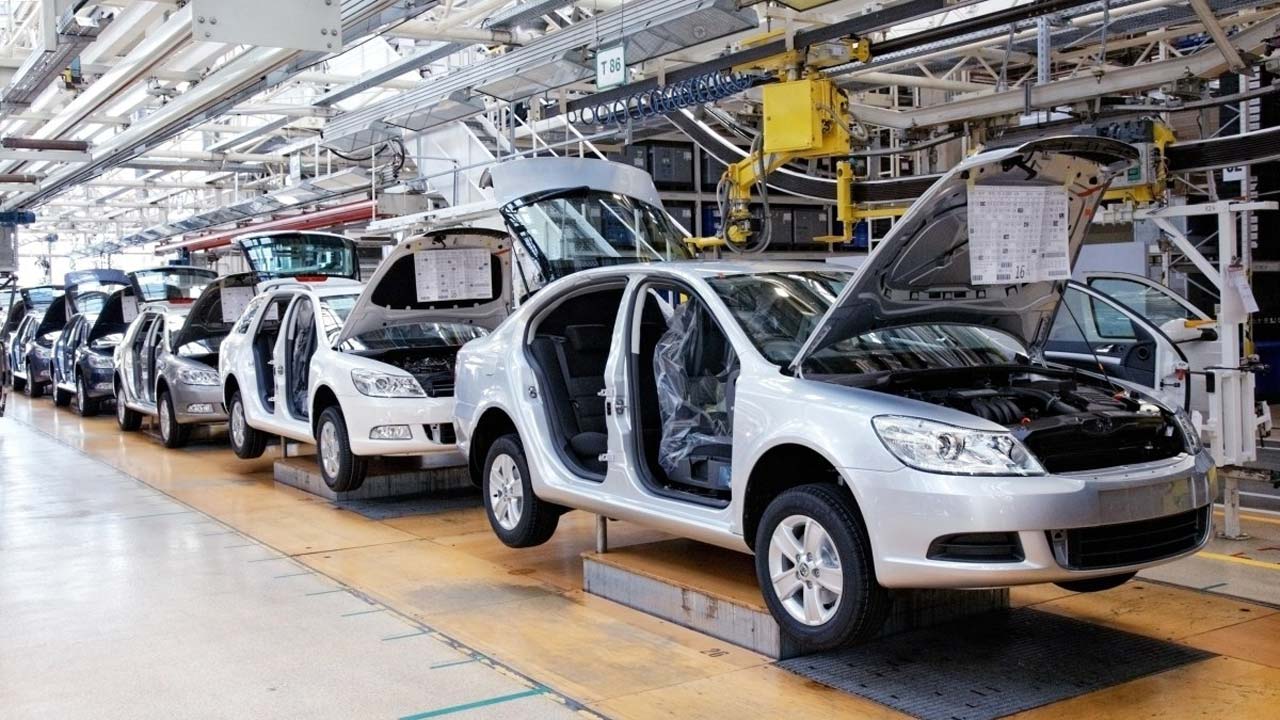
Under the NAIDP, over 50 Auto Assemblers were approved by the federal government. However, at the moment less than 10 of them are functional and operating at extremely limited capacity and at semi-knocked down (SKD) level when, as the Auto Policy envisaged, they ought to have graduated into CKD.
In a recent interview, former Acting Director-General of NADDC, Mr. Mamudu Lukman recalled that in the last 10 years of the auto policy, ‘considerable policy has been made’ with the manufacturing and assembly companies being revived but “they have not reached their full potential in capacity utilisation.”
He said, “The NAIDP launched in 2014 is still in effect to the best of my knowledge. There was a review version approved by the immediate past FEC.
“The NAIDP programs have been generally abandoned even as billions of naira have been sunk into them.” He also agreed that “most OEMs may not commit their funds in such capital intensive projects like automotive manufacturing without an Act assuring them of zero tolerance for policy summersault.”
Following the appointment of Joseph Osanipin as the DG in 2024, the auto policy has received a renewed attention. Several stakeholders’ meetings have been held to get sufficient inputs and buy-in of those that matter in the industry but it is uncertain when the Executive Bill would be forwarded to the National Assembly for the necessary legislative action.
An official of NADDC who spoke with the Transport Agenda simply said, “The Bill is receiving attention. We are working on the new draft and we are not rushing it because we don’t want to make mistakes. Very soon you will hear good news about the Bill being sent to the National Assembly.”
