Transportation Agenda is Nigeria’s premier magazine dedicated to chronicling developments, spotlighting innovations, and inspiring conversations within the transport and mobility sector. Born out of a need to document the evolving narratives around road, rail, air, maritime, and inland waterway transportation, our magazine serves as a trusted platform for industry professionals, policymakers, researchers, and enthusiasts.
Senator Said Ahmed Alkali Honourable Minister of Transportation
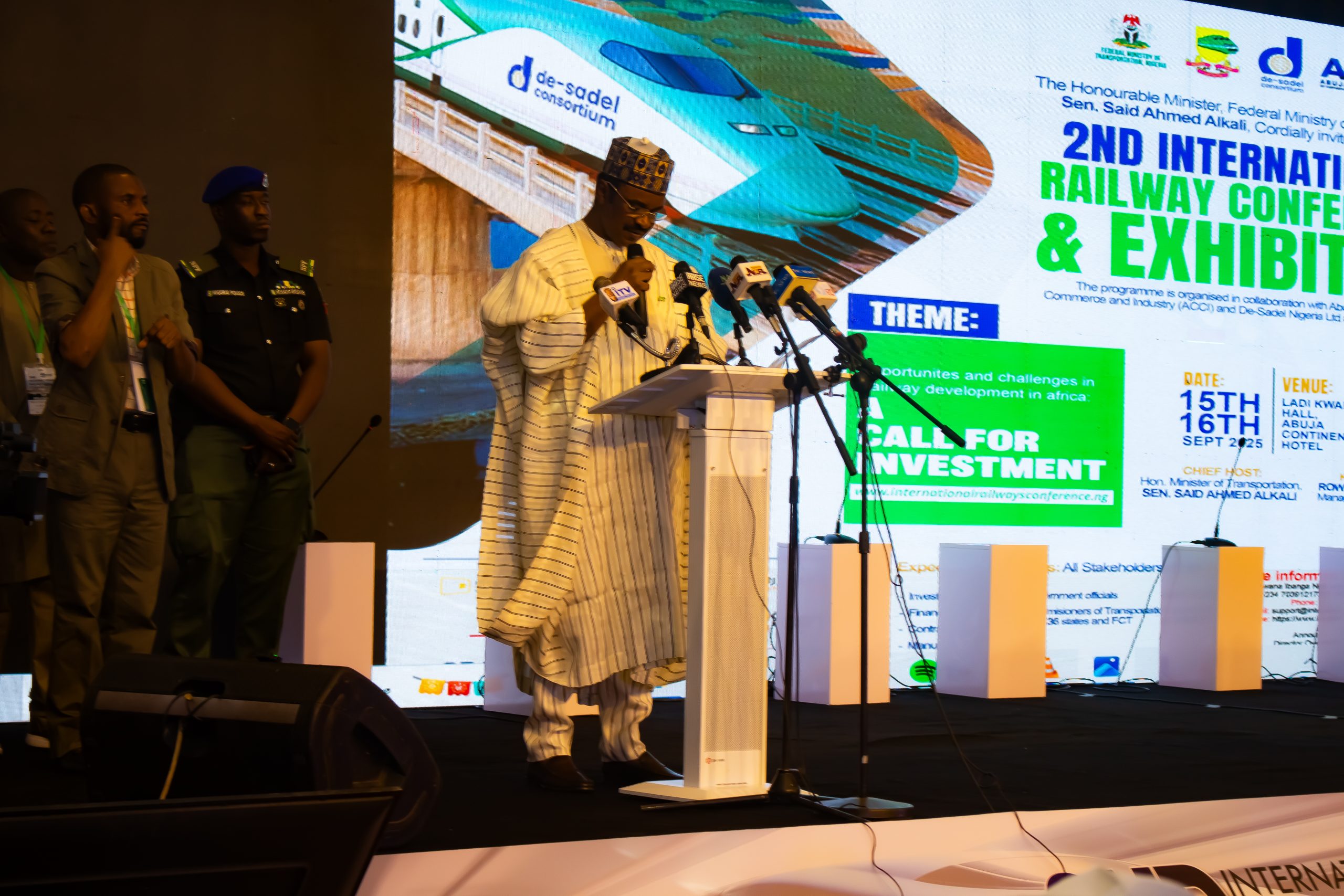
The Minister of Transportation, Said Alkali, has announced that the 387-kilometer Kano-Maradi railway project, which includes a new extension to Dutse in Jigawa State, has now reached 60% completion. The minister made this declaration in his remarks at the second International Railway Conference held in Abuja, highlighting the significant progress from its initial 5% completion rate.
According to the minister’s timeline, the Kaduna-Kano rail modernization project, now 53% complete, is expected to be ready for commissioning by December 2026. Furthermore, the Kano-Maradi line is projected to extend its service to Katsina by December of this year, with full completion and commissioning anticipated by March 2027. Minister Alkali also confirmed that the rehabilitation of the Lagos-Kano narrow gauge line will be successfully completed and put to use for freight, connecting to the Dala Inland Dry Port.
In a related development to enhance national transport infrastructure, the Federal Executive Council recently approved the construction of one modern bus terminal in each of the country’s six geopolitical zones. The terminals will be situated in Abeokuta for the South West, Onitsha for the South East, Warri for the South-South, Lokoja for the North Central, Kano for the North West, and Gombe for the North East. This initiative is designed to improve efficiency, public safety, and passenger welfare.
Minister Alkali reiterated the administration’s commitment to transportation as a gateway to the national economy, citing recent innovations such as the introduction of dual-fuel locomotive technology on the Abuja-Kaduna corridor to enhance operational cost-effectiveness. He also noted that the government has begun providing financial support for the establishment of light rail systems in states including Kaduna, Kano, and Ogun.
Conference participants welcomed the progress. Samuel Uko, Chief Executive Officer of De-Sadel Consortium, commended the federal government for its high-speed rail projects, revealing that upon completion, Nigeria is poised to have one of the world’s largest high-speed rail networks, a project expected to create up to two million direct and indirect jobs. The Secretary to the Government of the Federation, George Akume, affirmed that these ongoing projects will attract foreign investment, boost infrastructural development, and strengthen the nation’s revenue generation profile.