
Experts Blame Weak Political Will, Poor Implementation for Nigeria’s Transport Woes
- AviationMaritimePipelineRailwayRoad
- October 26, 2026
- No Comment
- 36

Transport and logistics experts have attributed Nigeria’s failure to develop an efficient, integrated transport system to weak political will and poor policy execution, despite the country’s wealth of local expertise and repeated government initiatives.
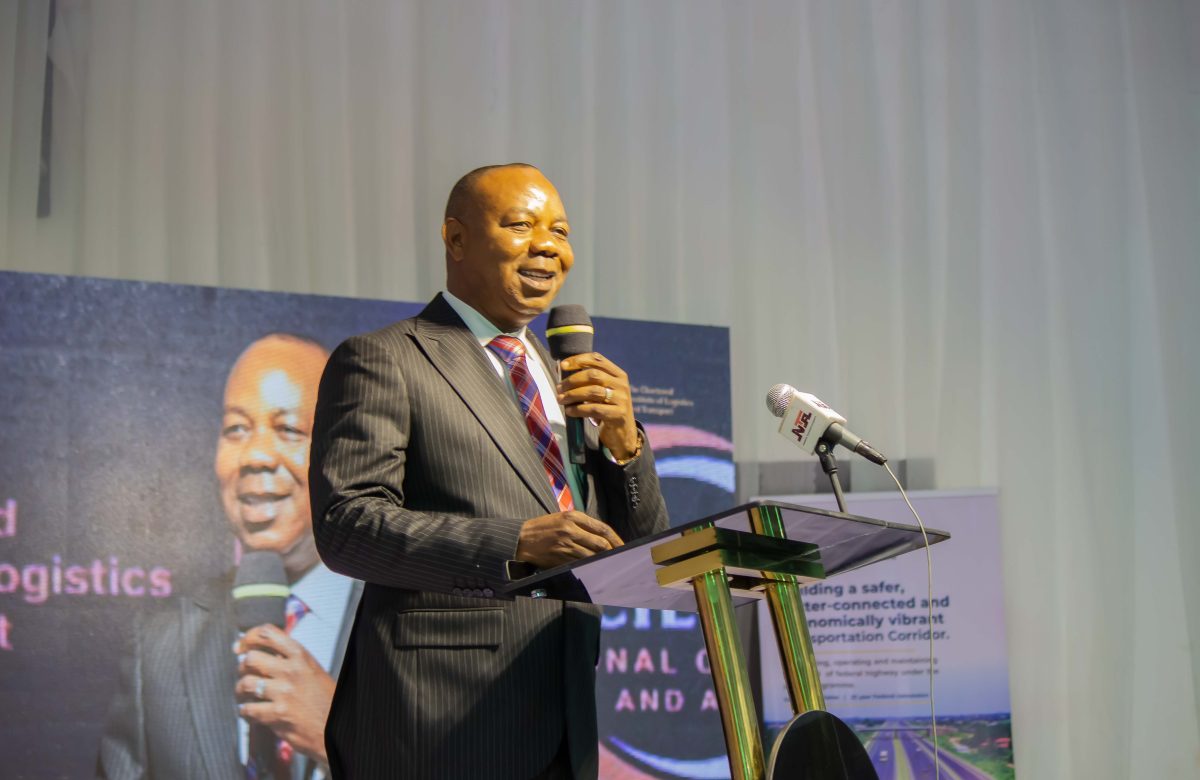
The consensus emerged at the second edition of the Transport Summit held over the weekend in Lagos, themed ‘Navigating Global Disruption and the Road Ahead: Mobility, Energy and Trade Facilitation for a Resilient Future.’
During a panel discussion on a paper presented by Dr. Femi Aiyegbajeje, a senior lecturer at the University of Lagos, titled ‘Rail-Led Multimodal Integration: Unlocking Efficient Transport, Trade Facilitation and National Connectivity,’ the experts agreed that the country’s primary challenge is not a lack of ideas, but the inability to translate policies into tangible results.
Dr. Azeez Mustapha, Managing Principal of AZ Logistics, emphasized that Nigeria possesses the capacity to build a functional integrated transport system but lacks the necessary political commitment.
“Nigeria does not lack much. What Nigeria lacks is implementation. We lack the political will,” Mustapha said.
He cited ongoing discussions to connect the Lagos rail network to airports as a prime example of a project whose success depends entirely on sustained implementation, urging all levels of government to prioritize execution and develop solutions tailored to the country’s realities.
Echoing this sentiment, Olubowala Ade-Onojobi, Managing Director of Expedite Movers Nigeria Limited, criticized successive administrations for introducing new policies without ensuring their effective execution. She urged authorities to focus on delivering existing frameworks rather than continually announcing new ones, noting that while Nigeria can learn from the United Kingdom’s transport system, it should avoid blindly copying foreign models.
“We have policy in this country. There is no year in which the government does not come up with new policies. The authorities should demonstrate how existing policies are being implemented,” she said.
Conversely, Oluwadamilola Emmanuel, Special Adviser to the Lagos State Governor on Blue Economy, argued that Nigeria does not need to import an entire foreign transport model to achieve effective integration. He advocated for homegrown solutions that build on existing initiatives, pointing to the Lagos State Cowry Card as a significant step forward.
According to Emmanuel, the unified payment platform allows commuters to seamlessly pay for journeys across boats, Bus Rapid Transit (BRT) services, and rail, demonstrating how a common payment system can improve convenience and connectivity across different transport modes.
Kingsley Anaroke, Publisher of MMS Plus Newspaper, called for a dedicated gathering of Nigerian transport experts to develop a practical framework for integrating the country’s infrastructure and services. He noted that while Nigeria has the human resources needed to design an efficient system, it has failed to harness its expertise and sustain policy implementation.
Anaroke cited the country’s Cabotage policy as an example of an initiative whose expected benefits have not been fully realized, warning that adopting foreign models without addressing local challenges will yield little progress.