
BEYOND THE CHECKLIST: How a Chinese Industrial Giant and a Nigerian Pioneer Are Rewriting the Future of Road Safety
- Lead Story
- July 3, 2026
- No Comment
- 197
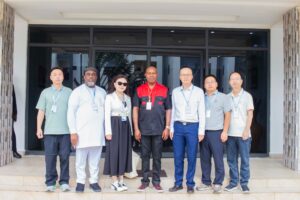
The Kugbo inspection service centre sits along a dusty stretch of Abuja’s outer ring road. Inside, the air smells of oil and rubber. A Toyota Camry rolls slowly onto the test lane, its wheels aligning with precision sensors. On a monitor above, a digital readout flashes green, indicating that brakes, suspension, and emissions are all within tolerance. For the driver, it is a routine check. For Temple Group Limited, it is the culmination of a 15 year battle to bring modern vehicle inspection to Nigeria.
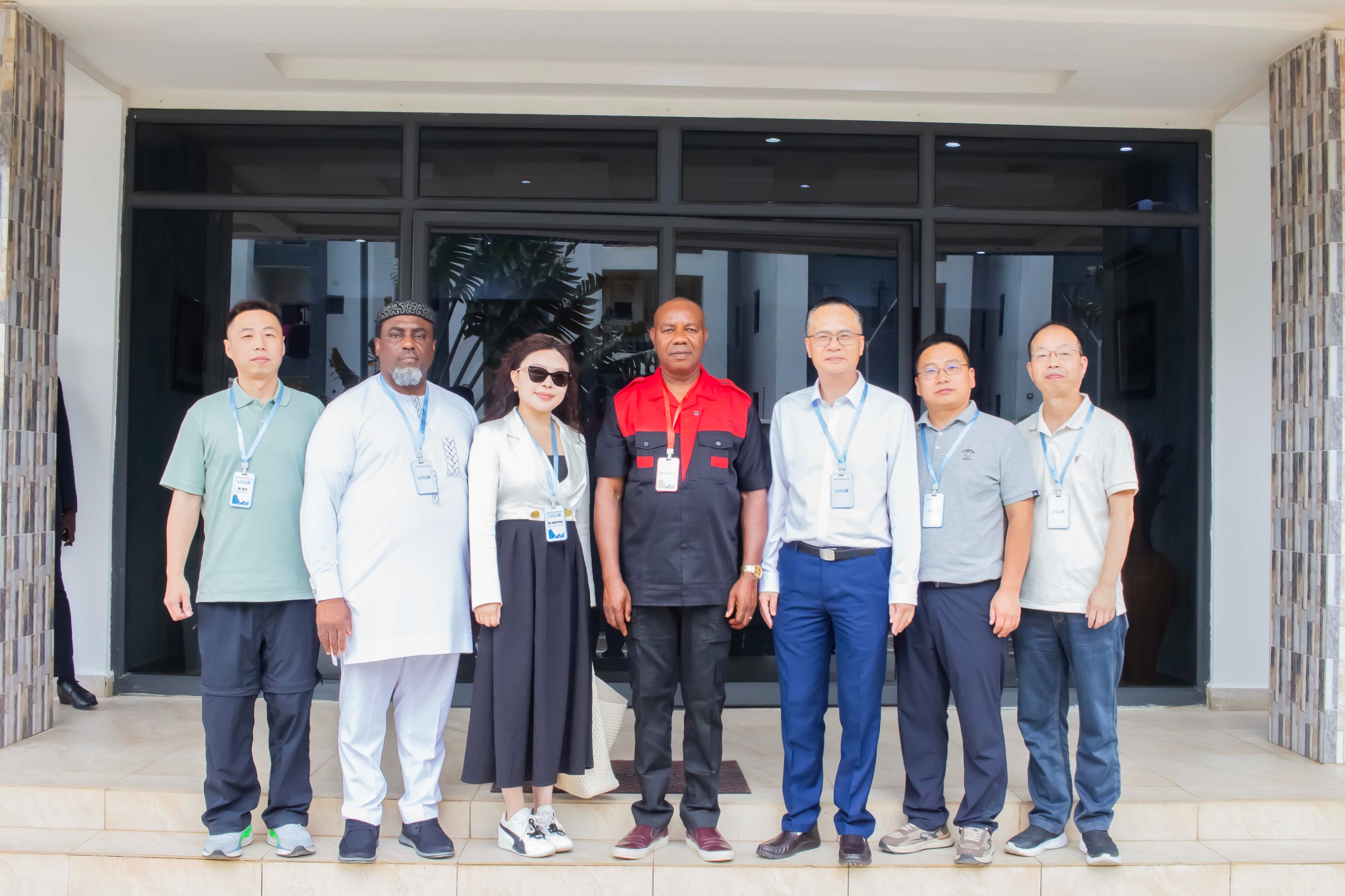
And now, a new chapter is unfolding. Temple Group, the company that pioneered vehicle inspection in Nigeria, is not just courting a foreign partner. It is laying the technical and institutional groundwork for a revolution in how the nation manages road safety, commercial transport, and regulatory compliance. Their partner is Hejia Industrial Group, a Chinese conglomerate with roots stretching back to 1979 and a subsidiary, Chengdu Chengbao, that has manufactured testing equipment under China’s Ministry of Transportation since 1970.
The week long strategic engagement between the two entities, which culminated in a series of high level technical presentations and site visits across Abuja, has moved beyond the realm of a Memorandum of Understanding. It has entered the critical phase of practical negotiation, equipment adaptation, and political alignment. At the heart of this collaboration lies a shared vision: to replace Nigeria’s fragmented, often manual, vehicle inspection system with a modern, automated, and data driven ecosystem capable of covering all 36 states by 2028.
For Prince Segun Obayendo, Group Managing Director of Temple Group, this partnership is the culmination of a 15 year journey fraught with ambition, setbacks, and persistent resolve. Addressing the Hejia delegation at Temple’s Abuja headquarters, Obayendo traced the company’s evolution from its first government approvals in 2012 and 2013 to the establishment of Nigeria’s first modern vehicle inspection centre at Katampe, Abuja. That facility was tragically demolished recently to make way for a federal road project. The site now sits within a total interconnected road network spanning approximately 7 kilometres. “I would say that we are still in the business as far as our project is concerned, and we are still learning what we are able to do in the circumstance,” Obayendo told the delegation, his voice carrying the weight of experience.
Despite this loss, Temple Group did not retreat. It currently operates across 26 to 27 states, employing staff in every region of the country. However, Obayendo was candid about a strategic decision to slow down expansion, explaining that inconsistent regulatory enforcement at the state and federal levels had created a compliance bottleneck. It made little sense to deploy expensive infrastructure in states where the political will to enforce vehicle standards was absent. The partnership with Hejia, Obayendo believes, provides the missing lever. By integrating superior technology and a clear, scalable implementation framework, the collaboration aims to unlock the political compliance required for nationwide coverage. His roadmap is ambitious yet concrete: a significant rollout in the southern region by June or July 2026, with the ultimate goal of establishing a presence in all 36 states by the end of 2028.
Responding to Obayendo’s vision, Mr. Song Xinmin, leading the Hejia delegation, offered more than just a sales pitch. He presented a comprehensive, phased collaboration framework designed specifically for the Nigerian context. The proposal involves leveraging Temple’s existing equipment while seamlessly integrating Hejia’s proprietary diagnostic tools into the current workflow, alongside upgrading the overall system capacity to meet modern safety standards. Crucially, the framework prioritizes knowledge transfer through extensive training of Nigerian personnel to manage, maintain, and deploy the entire system, ensuring long term operational independence. The long term commitment also includes moving beyond importing finished goods to manufacturing inspection equipment and components locally within Nigeria.
This last point signals a desire for a deep, lasting economic partnership rather than a simple transactional sale. The delegation’s itinerary was designed to assess every layer of this framework, from the technical capabilities of the Kugbo inspection centre to the regulatory landscape at the highest levels of government.
The most tangible outcome of the week’s discussions came when the Hejia delegation visited the Federal Road Safety Corps to present a solution to one of Nigeria’s most persistent transport headaches: axle overload. The proposed system is a sophisticated integrated weigh in motion solution. Unlike traditional static weighbridges that cause massive traffic jams, this system allows for non stop vehicle weighing at speeds of up to 100 kilometres per hour. Multi angle cameras capture evidence, roadside information boards display real time overload alerts, and a centralized dashboard provides live traffic data, violation analytics, and compliance tracking.
Assistant Corps Commander Olugbemile Olusegun welcomed the delegation with a tone of pragmatic optimism. He acknowledged the urgent need to move away from manual traffic management, stating that building a smart city cannot really be achieved without technology. He recalled his own 2023 trip to China, where he witnessed similar systems in operation. “I didn’t know that a time would come that you actually want to say, let’s introduce this technology to us,” he said, a hint of surprise still in his voice. He assured the delegation of the FRSC’s commitment to a collaboration aimed at reducing fatalities and infrastructure damage, a promise that resonates deeply in a country where road accidents and truck related damage are a daily reality.
The Hejia team presented a pilot timeline of just three to six months for construction, requiring only 500 millimetre excavations for underground sensors and lane by lane installation to maintain traffic flow. Key truck corridors like the Abuja-Kano highway and Lagos entry points are under consideration for the pilot site.
Beyond the technical pitch, the week was defined by crucial institutional visits. The delegation visited the headquarters of the Directorate of Road Traffic Services and the Federal Capital Development Authority, engaging with the bureaucrats and policymakers whose approval is essential for nationwide scaling. Senior Temple Group officials represented the company during these institutional engagements, underscoring the collaborative nature of the initiative. During the DRTS engagement, Temple officials outlined a three stage implementation plan: an initial short term phase of direct equipment purchases, followed by medium and long term phases characterized by substantial joint investment. The delegation was assured of Temple’s commitment to protecting Hejia’s investment, with a focus on establishing a transparent and mutually beneficial partnership framework.
The implementation strategy is geographically strategic. Nationwide deployment will be executed state by state, prioritizing high volume commercial truck states such as Lagos, Rivers, Cross River, and the Federal Capital Territory. For urban locations, Temple officials have suggested a 2000 square metre footprint, with larger plots available for highways.
For all the optimism, the road to 2028 is littered with potential obstacles. Nigeria’s history is replete with ambitious infrastructure partnerships that stalled at the execution stage, and political inertia remains a genuine threat. While the FRSC and DRTS have expressed interest, securing sustained budgetary commitments across successive administrations is never guaranteed. Currency volatility also looms large, as fluctuations in the naira to yuan exchange rate could dramatically inflate project costs and potentially derail the phased rollout. Furthermore, the knowledge transfer component requires a sustained investment in local technical education that Nigeria’s vocational training system has historically struggled to provide. For Prince Obayendo, however, these challenges are not deterrents. They are simply variables to be managed, and his confidence is rooted in the practical momentum already built.
As the Hejia delegation prepares to proceed to Lagos for further stakeholder engagements and site assessments, the tone of the partnership is one of cautious but palpable momentum. The Chinese team has indicated readiness to commence the pilot as early as this week, pending final site approval, and site selection is actively underway. The stakes are high. If finalized, this collaboration promises to drastically reduce road fatalities by removing unsafe vehicles from circulation, protect Nigeria’s road infrastructure from the devastation caused by overloaded trucks, create a new industrial sector through local manufacturing, and provide transparent, data driven compliance that removes the human discretion which often corrupts manual inspection processes.
The urgency of this intervention cannot be overstated. Recent reports from the Standards Organisation of Nigeria and industry stakeholders in 2025 have highlighted a critical gap: the current network of weighbridges is not widespread enough on major federal highways. This scarcity directly contributes to chronic road damage caused by overloaded commercial vehicles, as many trucks evade checks altogether. According to SON, more weighbridges need to be installed on Nigerian roads to tackle this problem (ThisDay, May 29, 2025). Consequently, there are ongoing calls from transport operators, road safety advocates, and state governments for the installation of additional weighbridges to curb the menace (The Guardian, May 29, 2025). Temple Group and Hejia’s proposed weigh in motion system directly addresses this deficiency, offering a scalable, high speed alternative that can be deployed across multiple corridors without the massive land requirements of traditional static weigh stations.
For Prince Segun Obayendo, the dream is a simple, powerful one: a Nigeria where every vehicle on the road is certified safe, where compliance is a matter of automated fact, not political will, and where the Temple Group brand becomes synonymous with national safety. But the dream is also grounded in the immediate. This week, the Hejia delegation will board a flight to Lagos. By Friday, they hope to have a pilot site selected. By Monday, the first shovel could hit the ground. For the truck drivers who spends hours stuck at a weighbridge, or the family mourning a road fatality, the success of this partnership is not measured in MOUs or joint ventures. It will be measured in the number of lives saved and the number of vehicles that finally, properly, pass the test.
– Olusemire Jegede