
Prince Obayendo: Nigeria Bets on Logistics Overhaul, China Ties to Chase $1 Trillion Economy
- AviationMaritimePipelineRailwayRoad
- July 28, 2026
- No Comment
- 422
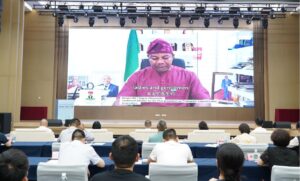
Technical Adviser to the Vice President on Transportation Logistics and Innovation
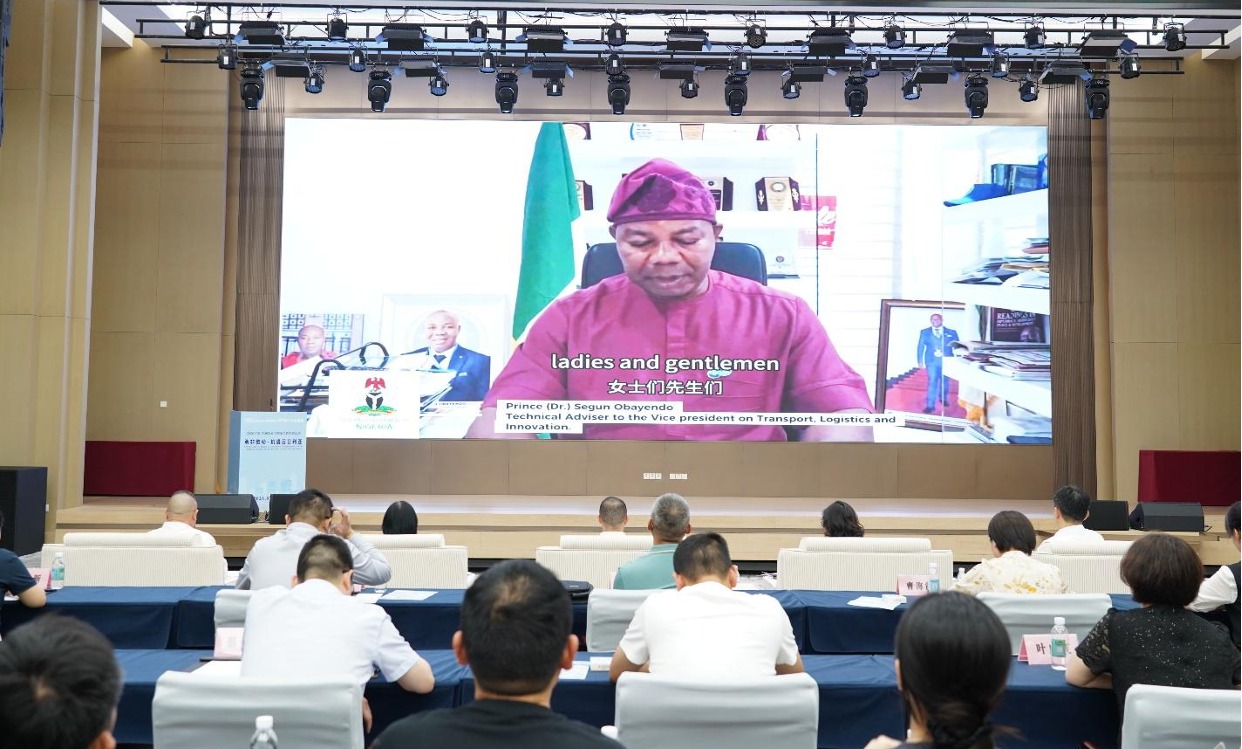
Prince Segun Obayendo, the Technical Adviser to Nigeria’s Vice President said on Sunday that the country’s drive to build a $1 trillion economy by 2030 will depend on fixing sluggish supply chains, and that a deeper logistics partnership with China is now at the heart of that effort.
He addressed the Ningbo-Africa Trade & Logistics Cooperation Forum via video link. He outlined a government strategy built on integrated transport corridors, linking seaports, inland dry ports, rail, highways and modern warehouses, to slash business costs and position Nigeria as West Africa’s distribution hub.
“A trillion-dollar economy will not be built on production alone. It will turn on how efficiently we move people, goods and services,” Obayendo said. “Modern infrastructure and resilient supply chains are what attract investment and drive sustainable growth.”
The forum, hosted by the Pan-African Institute for Supply Chain Innovation, the Ningbo China Institute for Supply Chain Innovation and China-base Group, drew trade officials and logistics investors seeking to convert policy dialogue into concrete deals.
Obayendo, whose promotion places him directly under the President after previously advising the Vice President, said Nigeria’s natural strengths; its strategic location, the continent’s largest consumer market and access to the African Continental Free Trade Area, remain underused without reliable multimodal infrastructure. He called for faster development of logistics networks that can make Nigerian exports more competitive and lower the cost of doing business.
He singled out China’s zero-tariff policy for African goods as a critical opening. “By strengthening our logistics capacity and simplifying trade procedures, we can expand exports, attract manufacturers and move Nigerian firms deeper into global value chains,” he said.
The new presidential adviser stressed that the relationship must extend beyond trade volumes. “We need technology transfer, industrial expansion, infrastructure investment and skills development that create decent jobs for millions, here and across Africa.”
A concrete step emerged at the forum: a proposed cooperation agreement on port and logistics infrastructure between GK&A Logistics Services Limited and China-base Ningbo Foreign Trade Co., Ltd. Obayendo called the deal a practical move to raise Nigeria’s cargo-handling capability and cement economic ties with China.
“Logistics is no longer a back-office function. It is a strategic asset,” he said. “Nations that get it right become more competitive, draw more investment and unlock new pathways to development. That is where Nigeria is headed.”
The presidency has pledged continued backing for policies and partnerships that advance logistics innovation, trade facilitation and industrial growth, with Obayendo calling on governments, development banks and private investors to follow through on commitments made in Ningbo.