
Kara Bridge Repairs: First Phase Completed as Traffic Eases Slightly on Lagos-Ibadan Expressway
- Road
- September 10, 2026
- No Comment
- 347
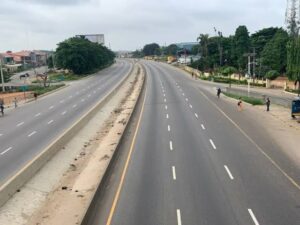
Motorists on the Lagos-Ibadan Expressway saw modest relief on Wednesday after the contractor handling repairs on the Kara Bridge completed the first phase of concrete works, though congestion continued along the busy corridor.
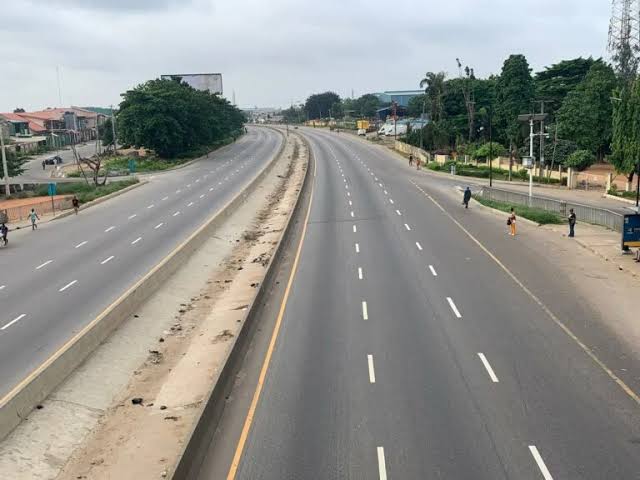
The progress followed Tuesday’s severe gridlock, when some commuters spent nearly four hours on the road as the repair works forced a partial closure of the bridge. By Wednesday afternoon, traffic had improved slightly, but vehicles approaching the bridge were still moving slowly.
One motorist said he joined the traffic shortly after Emergency inward Lagos and was approaching the Otedola area at about 2:30 p.m. “It’s better than yesterday. I spent almost three hours from the 7Up area to get to Otedola on Tuesday. It was crazy,” he said.
The Federal Ministry of Works began the intervention to repair damaged expansion joints on the bridge, reducing the number of available lanes and putting significant pressure on the expressway.
The Acting Controller of Works in Ogun State, Richard Adeleye, dismissed concerns that repairs were progressing slowly. “Who is saying the pace of work is slow? We are almost done with one side. We started yesterday,” he said, adding that the hardship experienced by motorists was understandable given the importance of the repairs. He said the damaged expansion joints had contributed to accidents on the bridge, making the intervention necessary despite the temporary inconvenience.
According to him, the contractor plans to complete the second section and switch to the other side of the bridge as quickly as possible.
However, rainfall on Wednesday forced the suspension of the next phase of concrete and stone works. Workers continued drilling the expansion joint in preparation for installation, while construction activities that could not continue in the rain were put on hold.
A traffic update on the bridge said only two lanes were available to motorists heading towards the OPIC Turning, forcing the four lanes from the Secretariat towards Kara Bridge to merge into two about 10 metres before the bridge. The lane reduction also affected traffic around New Garage, where traffic lights were used to alternate vehicles approaching from Isheri-Olowora and River Valley with those coming from Otedola Bridge and heading out of Lagos. As a result, the traffic backlog extended towards the Mobil-Otedola axis.
Traffic management personnel, including LASTMA officers, police and other relevant agencies, were deployed at strategic points to regulate movement. Adeleye said the agencies were on the ground to manage the situation and that arrangements had also been made for traffic control at night.
He advised motorists to remain patient and consider alternative routes, including the Ogijo and Ikorodu corridors, where traffic was reportedly lighter. “I am also going through Ogijo, through Ikorodu now. That road is very free right now,” he said.
The Lagos State Government had earlier warned motorists to expect delays during the two-week repair exercise and advised them to plan their journeys accordingly. In a travel advisory signed by the Commissioner for Transportation, Oluwaseun Osiyemi, the government said half of the affected section would be closed at a time, with motorists expected to use the available lane interchangeably.
The impact of the closure was worsened by the volume of traffic feeding into the Kara corridor from several directions, including 7Up, the Secretariat, CMD Road, Ojodu Road and other connecting routes. Some motorists resorted to alternative routes through Ikorodu, Sagamu, GRA, Oba Akran, WEMCO Road, Ogunnusi Road and Ojodu-Berger, although many still reported spending hours on the journey.
Beyond the immediate repairs, Adeleye said the government was mindful of concerns over similar problems emerging on other bridges, including expansion joints showing signs of deterioration. He said the current repairs were being executed with the aim of ensuring durability and preventing a recurrence.
According to him, the concrete being used is expected to attain the required strength within five to seven days, after which the repaired section can be opened to traffic. He assured motorists that, barring unforeseen circumstances, the entire intervention would be completed within the scheduled two-week period.