
Nigeria Unveils National Land Transport Policy After 60-Year Struggle, VP Shettima Declares Transportation the “Arteries of Prosperity”
- Road
- September 3, 2026
- No Comment
- 704

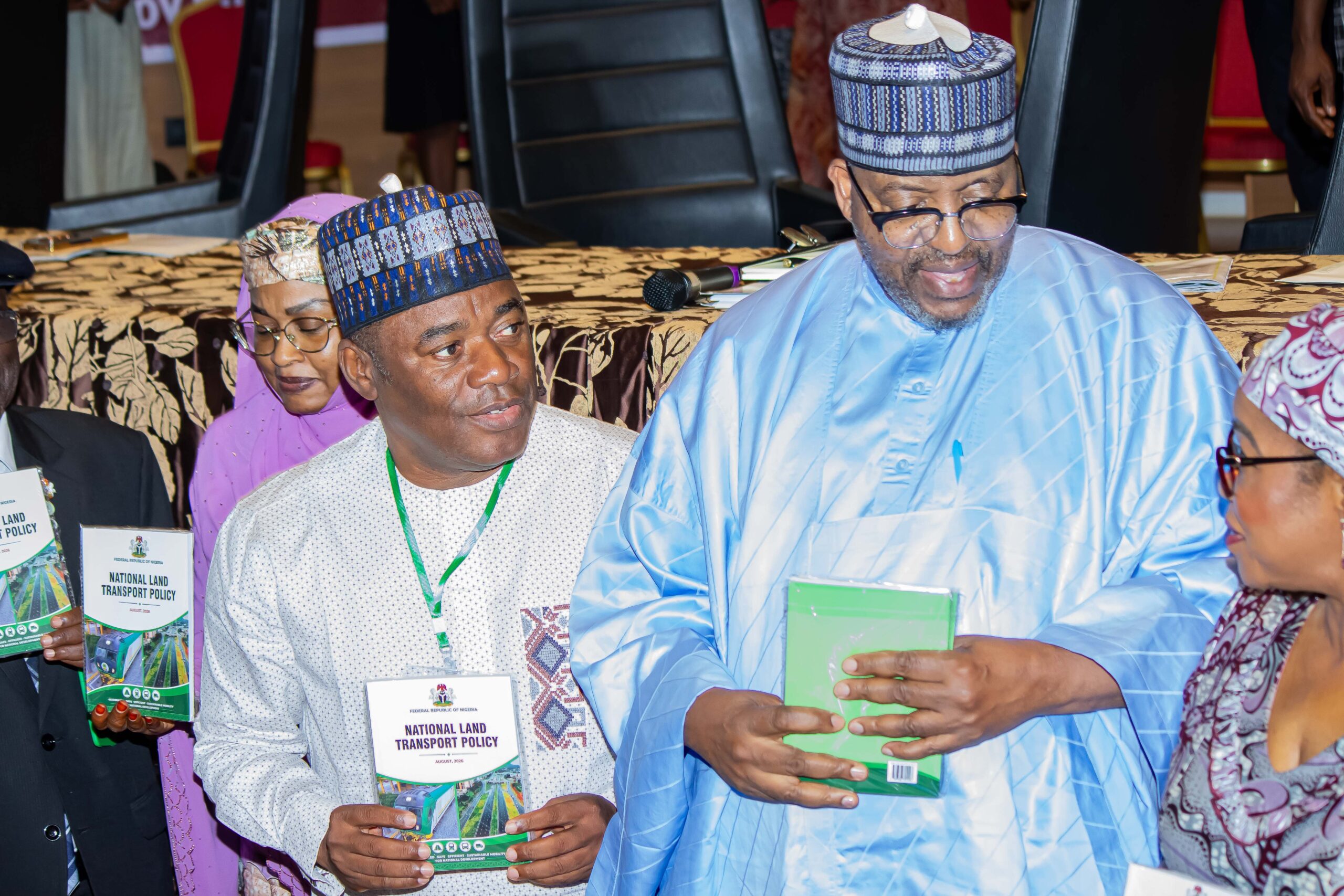
The Federal Government formally launched Nigeria’s first-ever approved National Land Transport Policy on Thursday, ending a six-decade wait. Vice President Kashim Shettima set the tone, declaring transportation the “arteries of prosperity” that will determine whether Nigeria’s economic potential is realized.
The landmark document was presented at the 19th National Council on Transportation in Abuja, where officials from the highest levels of government framed it as the turning point for a sector long hampered by fragmented planning and abandoned drafts.
Vice President Kashim Shettima, represented by Special Adviser Aliyu Modibbo, delivered a sweeping address that cast transportation as the circulatory system of the nation. His central metaphor was unmistakable: transportation is the “arteries of prosperity”, the vital channels through which economic life flows.
“A nation becomes economically whole when distance loses its power to imprison opportunity,” Shettima said. “Every rail line carrying harvests to market, road shortening a worker’s journey, port releasing cargo inland and transit system returning hours to families binds national ambition to daily life.”
He insisted that the policy’s success will be measured in ordinary experience: “A worker commuting faster, a student travelling safely to school, a trader reaching the market at lower cost and a family spending less on transportation are encountering governance in practical form.”
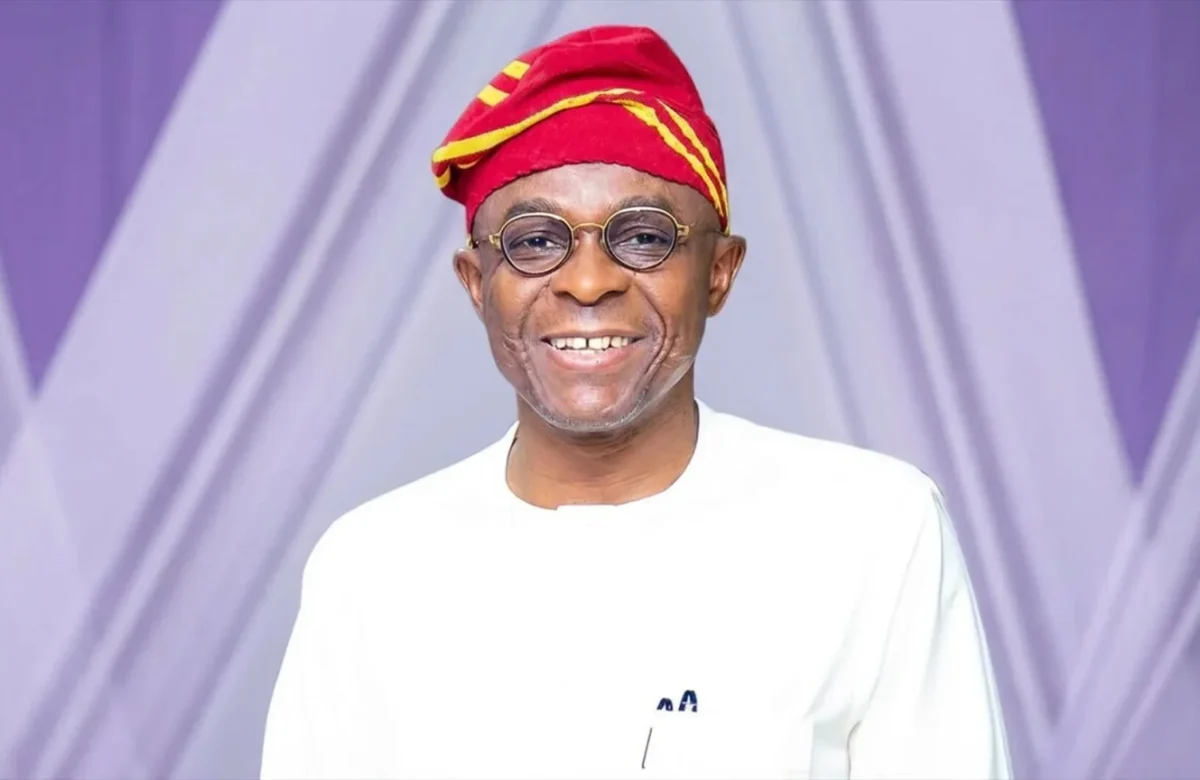
The Vice President underscored the administration’s commitment by noting a historic appointment: Prince Segun Obayendo has been designated as Technical Adviser on Transportation, Logistics and Innovation, the first such appointment since Nigeria’s return to democratic rule in 1999.
He also highlighted the strategic logic of rail expansion, listing the Lagos–Ibadan and Abuja, Kaduna corridors as operational, while the Kaduna, Kano project advances toward completion. He pointed to the Port Harcourt–Maiduguri corridor and the Kano–Maradi Railway Project as evidence of a national network in the making.
“Our ports belong to the same chain, because a modern port cannot fulfil its promise when cargo cannot move inland efficiently,” Shettima said, emphasizing the need to connect ports to rail, roads, and production centres.
On urban mobility, he announced that the Administration has approved State Urban Light Rail Projects in Lagos, Kaduna, and Kano, pilot schemes whose success will guide expansion to other cities.
“Projects designed to ease the daily burden of Nigerians cannot be allowed to drift,” he warned.
He closed with a powerful charge to the council: “Transportation is the bridge between economic potential and prosperity. Our charge is to build a Nigeria in which no farmer is defeated by distance, no industry is stranded from its market, and no citizen’s future is narrowed by the journey to opportunity.”
Professor Samuel Odewunmi, Vice Chancellor of the University of Uyo and Chairman of the Policy Development Committee, delivered a candid and often blunt account of the journey to this moment.
The struggle began in 1961, when the federal government commissioned the Stanford Research Institute to conduct foundational research. Multiple attempts followed, integration policies in 2003, reform efforts in 2008, visions in 2013, and revisions in 2021, all failing to cross the finish line.
“It was not a 2-2 correctional effort,” Odewunmi noted, explaining why a 2021 sectoral reform initiative stalled.
The breakthrough came in 2023–2024 with a strategic decision by the Minister of Transportation to focus on land transport specifically.
“The minister said, no. Let us go ahead and have the land transportation policy. So that will be within our control,” Odewunmi recalled.
On July 21, 2025, the Federal Executive Council finally approved the document.
Odewunmi described the moment as “the end of the beginning” rather than a finished victory; a pointed reminder that the real work lies ahead.
The National Land Transport Policy spans 14 chapters, 25 pages, and over 30,000 words, covering road transport, rail, pipelines, and intermodal integration. Its core promises include:
-
Organise and regulate: Replace free entry and fragmented routes with clear standards and licensing requirements.
-
Integrate: Connect roads, rail, waterways, ports, airports, and pipelines end-to-end.
-
Professionalise: Ensure qualified professionals manage the sector, not political appointees.
-
Invest: Attract investment into an inclusive, affordable, accessible, safe, and environmentally responsible transport system.
Odewunmi did not sugarcoat the sector’s challenges. He highlighted the dominance of informal road transport, weak intermodal connections, and incomplete corridors.
On infrastructure vandalism, he was blunt: “We are having issues with vandalisation of railways, even roads, even bridges in this country, and it’s a sign of our moral values degenerating.”
He noted that a Chinese contractor had told him vandalising railways carries a death sentence in China; a stark contrast to Nigeria’s situation where rail infrastructure is routinely destroyed for scrap metal.
The policy also targets the multiple levies that drain transporters. “If a trailer takes off from Kano, before he gets to Lagos, they would have drained him on average around 40,000 to 41,000 naira on tolls and illegal tokens,” Odewunmi revealed.
Addressing the controversial fuel subsidy debate, Odewunmi cautioned strongly against reversing course.
“We have moved minimum wage from 30 to 70, which is already part of the movement of subsidy. If immediately you want to go back to that, you will be in a bad way,” he argued.
He warned that the mere discussion of reintroducing subsidy is already scaring away investors, with Nigeria’s oil output constrained to 1.7 million barrels per day; a level that has made foreign creditors wary of committing fresh capital.
Instead, he proposed using savings from subsidy removal to support alternative energy options like CNG and electric vehicles.
In a striking departure from typical policy presentations, Odewunmi made a pointed appeal for political alignment to drive implementation across the federation, arguing that shared political platforms offer a unique mechanism for ensuring policy coherence. He acknowledged the constitutional reality that the federal government can only advise state governments, but insisted that when the same political platform governs at both levels, the party’s national leadership possesses the moral and organizational authority to direct its state chapters toward unified action.
Drawing a parallel with historical precedent, he recalled the Unity Party of Nigeria era, when governors were constitutionally bound to implement the party’s four cardinal programmes as a condition of their political mandate. This, he argued, represents an untapped opportunity for the current administration to leverage party discipline and political cohesion to fast-track the transport policy’s implementation across states that share the same political vision.
The policy prescribes a phased implementation plan:
-
First 24 months: Launch forums, set standards and baselines, establish delivery and legal frameworks, communicate the policy nationwide.
-
Years three to five: Scale infrastructure, expand the banking system, deepen institutional capacity.
-
Long range: Full integration and optimisation.
But Odewunmi conceded the timeline is already slipping. “Out of the two years, we have spent one year and about two, three months gone,” he cautioned. No dedicated funding source has yet been allocated for the 30,000-word framework, and experts warn that without it, the policy could still suffer the fate of its predecessors.
Engr. Olufunso Adebiyi, Permanent Secretary of the Federal Ministry of Transportation, then provided the concrete technical updates that ground the policy in reality.
He framed integration as the ministry’s core objective: “For the Federal Ministry of Transportation, integration is ensuring that our various modes of transportation do not develop in isolation, but function as part of one national system.”
On rail expansion, Adebiyi confirmed:
-
Lagos – Ibadan and Abuja – Kaduna corridors are operational.
-
Warri – Itakpe line remains in service.
-
Kaduna – Zaria – Kano line is set for commissioning in December 2026.
-
Kano – Katsina segment, originally targeted for completion by end of 2025, is now expected to be finalized shortly.
A particularly innovative development is the redesign of the Kano Metro line to begin directly from Kano Airport, allowing passengers to board a train immediately after landing. Similar adjustments are underway in Kaduna.
“When you fly to Kano, you can join a train from Kano Airport to any part of Kano,” Adebiyi explained.
On port connections; a critical step toward easing pressure on Nigeria’s overburdened port system; Adebiyi revealed that the Ibadan – Lagos rail has been extended to Apapa Port, with the Tincan – to – Apapa connection already awarded. He described witnessing trains loading 30 to 40-foot containers from Apapa Port and transporting them directly to the Ibadan Dry Port.
“By the time we are through with the Ibadan – Ilorin – Minna to Abuja line, the ports will be empty and totally decongested,” he said.
Odewunmi closed the council with a sobering reminder: “No transport policy document is sufficient. The issues that deal with are dynamic and emerging. Therefore, we must keep an eye on reviewing, monitoring, and adjusting. At most, every five years, you must come back to have it checked.”
His final warning was equally pointed: “Throwing money and force at it is not enough. We have to throw our brain at it.”
As the council concluded, the countdown to the first 24-month benchmark had already begun; and Nigeria’s transport sector now faces its oldest and most persistent question: will the document that took six decades to write finally be implemented, or will it join the ranks of its abandoned predecessors?
By Olusemire Jegede
Exclusive Coverage in Transportation Agenda Magazine
For the full report on the 4-day National Council on Transportation and the official unveiling of the National Land Transport Policy, including in-depth analysis of the policy’s provisions, and a comprehensive breakdown of implementation timelines, see the September edition of Transportation Agenda Magazine. This exclusive feature will provide readers with detailed coverage of the council’s deliberations, the policy’s strategic implications for Nigeria’s transport sector, and expert perspectives on the challenges and opportunities that lie ahead. Don’t miss this definitive account of one of the most significant policy milestones in Nigeria’s transportation history.