
Tinubu, Sanwo-Olu, Experts Converge in Lagos as CIOTA Conference Charts Path to Integrated Transport System
- Lead Story
- October 13, 2026
- No Comment
- 66
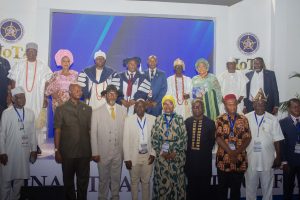
President Bola Ahmed Tinubu has linked Nigeria’s ambition to build a $1 trillion economy by 2030 to a fundamental overhaul of the nation’s transportation infrastructure, declaring that transport is not a supporting service but a critical economic sector in its own right.
The President spoke at the 8th National Transport Conference of the Chartered Institute of Transport Administration of Nigeria (CIOTA), held in Lagos on Tuesday. The two-day event, themed “Integrated Multimodal Transport System for Sustainable Development in Nigeria,” brings together policymakers, industry leaders, royal fathers, operators, investors and academics.
President Tinubu, represented by Engr. Olufunso Olusesan Adebiyi, FNSE, Permanent Secretary, Federal Ministry of Transportation, commended CIOTA for its role in professionalising the sector since attaining chartered status in 2019, noting that modern transport—spanning road, rail, maritime, aviation and digital platforms; demands specialised knowledge, ethical standards and continuous professional development.
“Transport is the physical infrastructure of economic activities,” the President said. “It connects firms to markets, factories to consumers, seaports to the hinterland, and Nigeria to the wider African and global economy.”
He noted that under the Renewed Hope Agenda, his administration has prioritised transport infrastructure as a driver of growth, national integration, job creation and investment, citing the Renewed Hope Legacy Road Projects, the National Transport Policy for land and maritime development, and the Smart National Transport Data Bank.
“If we get transportation right in the digital age, the $1 trillion economy becomes much achievable,” he said. “A road that does not connect effectively to a rail terminal, seaport, airport, inland dry port or logistics centre does not deliver its full economic value.”
The President challenged CIOTA to become a stronger strategic partner to government, urging the Institute to generate solutions through its conferences, provide evidence through research, and attract investors through its networks. He called for a sector built on productive integration, climate-smart sustainability, and professional, technology-driven operations.
Sanwo-Olu: Nigeria’s Problem Is Connectivity, Not Infrastructure
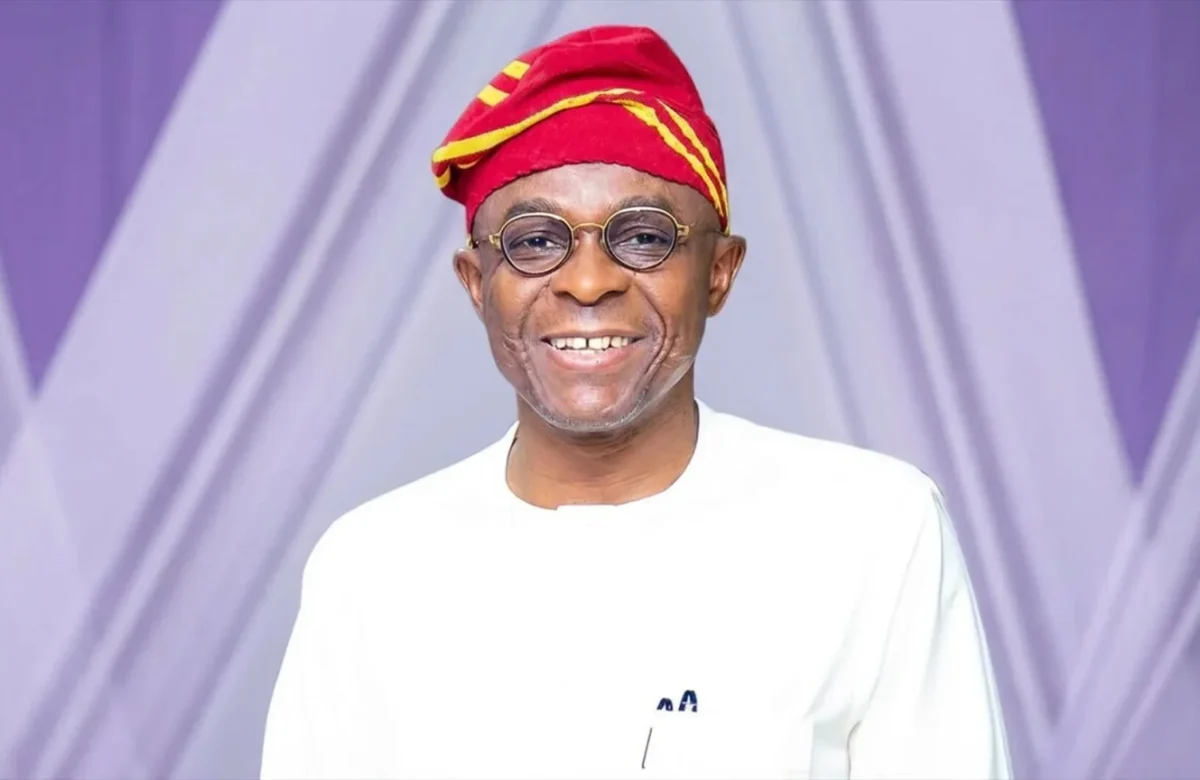
Governor Babajide Sanwo-Olu of Lagos State declared that Nigeria does not lack transport infrastructure but lacks the connections between them.
“A container can clear the port in a day and lose a week on the road to the hinterland,” he said. “Every mode in this country is working hard. Too few of them are working together.”
The Governor, represented by Hon. Sola Giwa, his Special Adviser on Transportation, highlighted Lagos State’s progress. The Blue Line began commercial service between Marina and Mile 2 in 2023 as the first intra-city rail system fully funded by a sub-national government. The Red Line’s first phase opened in October 2024, sharing a corridor with the Nigerian Railway Corporation on a federal right-of-way.
He announced that the Green Line, a 68-kilometre rail project from Marina to Lekki Free Zone, and the 57-kilometre Purple Line from Redemption Camp to Ojo, are the next stages of the state’s railway plan. Financing for the Green Line has been secured, with construction expected to commence next year.
Sanwo-Olu outlined five lessons from Lagos: plan the transfer, not just the line; make fares, ticketing and information work as one system; build institutions before infrastructure; recognise that affordability has a cost and subsidy cannot be the only tool; and invest in professionals.
“The best trains and ferries in the world fail in the hands of untrained operators,” he said. “The future of transport in Nigeria will not be determined by how much infrastructure we build alone, but how well we connect what we build.”
Otunola: Declare Public Transport a Social Service
In his keynote address, Engineer Biodun Otunola, Managing Director of Planet Projects Limited, called on the Federal Government to declare public transportation a social service and shift subsidy from petroleum products to public transport services.
“Today, people are paying about N1,000 from Ikorodu to Marina; before it was N300. People are spending 70 percent of their income on transportation,” he said. “The real issue is not the price of petroleum. It is whether you have an alternative public transport system that is affordable, efficient, regulated and clean enough for people to drop their cars.”
Otunola argued that Nigeria needs a national transport master plan, better integration among federal ministries and agencies, and a reduced role for Ministries of Works in urban transport planning. He also cautioned that buying CNG buses alone will not solve the problem.
“Public transportation is not about buses alone,” he said. “In other parts of the world, public transport is treated as a social service. Government must subsidise it.”
Dairo: Replicate Aviation Standards Across All Modes
Engineer Gbenga Dairo, Commissioner for Transport, Ogun State, presented a paper titled “The Journey to Better Mobility: Confronting Challenges, Securing Outcomes,” calling on transport professionals to replicate the standards of the Nigerian aviation sector across road, rail and water transportation.
Dairo, who superintended the certification and operation of the Gateway International Airport in Ogun State, said aviation performs better because of strict enforcement of rules, continuous training of professionals, and effective public-private partnership within a regulated system.
“Why is it that in aviation, when an incident occurs, a reaction is generated? Institutions step in to understand why and prevent future occurrences,” he asked. “In contrast, in road transport, it is characterised by complete disregard for life and disjointed coordination.”
He noted that road transportation accounts for more than 95 percent of transport supply in Nigeria, yet the informal sector dominates it. He described intra-city public transport as “a lawless zone, unplanned and completely unregulated,” where passengers face high costs, poor service quality and safety risks.
Dairo cited the Abia State bus interchange terminal in Umuahia and the Lagos Blue Line as examples of infrastructure and services approaching aviation standards, praising Planet Projects for its involvement in the Abia project.
He challenged CIOTA and other professional institutions to demand excellence from their members and be prepared to sanction those found wanting, as is done in the medical and legal professions.
“You cannot call yourself a professional and be found not to be responsible in performing your role, yet get away scot-free,” he said. “The successful transformation of this sector lies with us, professionals and sector practitioners, not only with politicians.”
CIOTA President Calls for Professionalisation, Formalisation
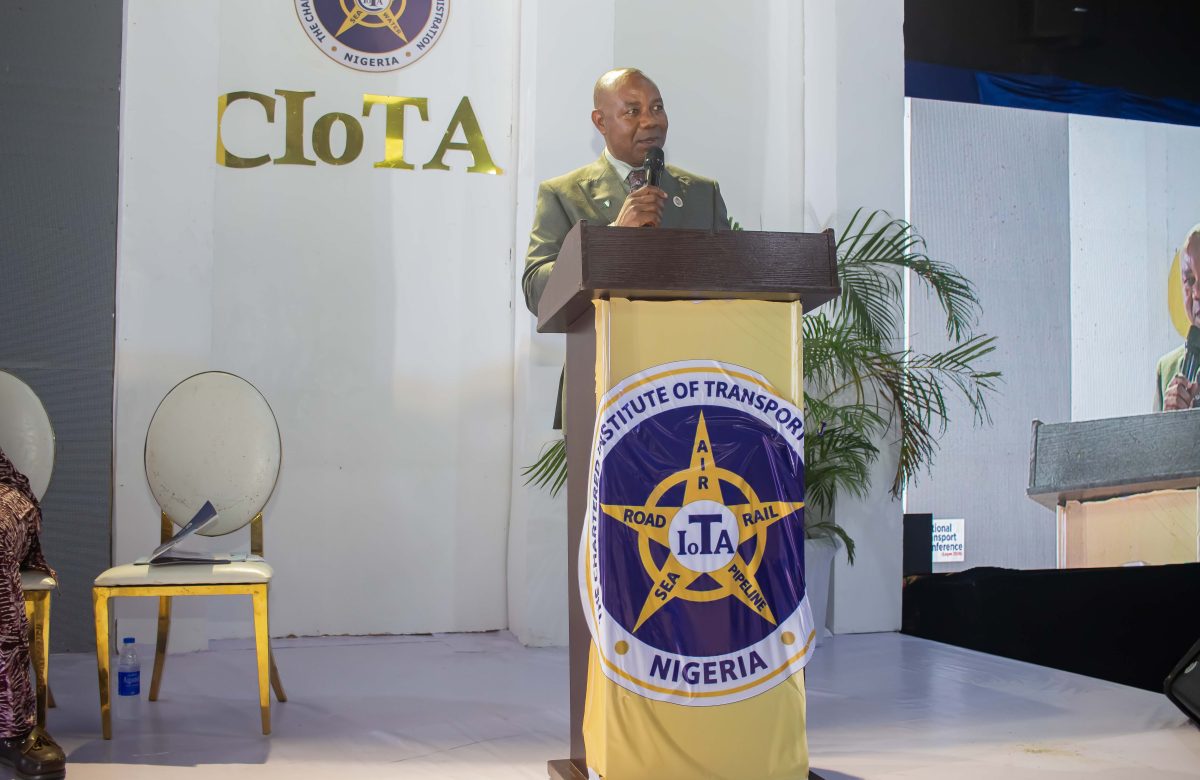
In his opening remarks, CIOTA President Prince (Dr.) Segun Ochuko Obayendo called for urgent reforms to professionalise and formalise Nigeria’s transport sector, saying the country must move from fragmentation to integration, from informality to structured enterprise, and from promises to measurable performance.
“We cannot integrate what we have not organised, and we cannot fully modernise what we have not adequately profiled,” he said.
Obayendo urged government at all levels to give qualified transport professionals positions of technical and managerial responsibility, and called on banks, pension funds and development finance institutions to treat transportation as a productive investment sector.
He outlined three commitments to guide the conference: “Let professionalism be our standard. Let integration be our strategy. Let investment and innovation be the engines of our transformation.”
CIOTA Founder Recounts 40-Year Journey
CIOTA founder Oba Elejirin of Ejirin Kingdom, His Royal Majesty, Oba Rafiu Ishola Babatunde Balogun (Ejalonibu), recounted the Institute’s humble beginnings, recalling that he set up the Nigerian chapter in 1981 after studying transportation in the United Kingdom. He said the Institute began in his private sitting room and later moved to spaces provided by Chief Augustine Ilodibe of Ekene Dili Chukwu Transport and others.
“What started like a baby 40 years ago has grown out to be an adult,” he said.
Honorary Fellowships and Goodwill Messages
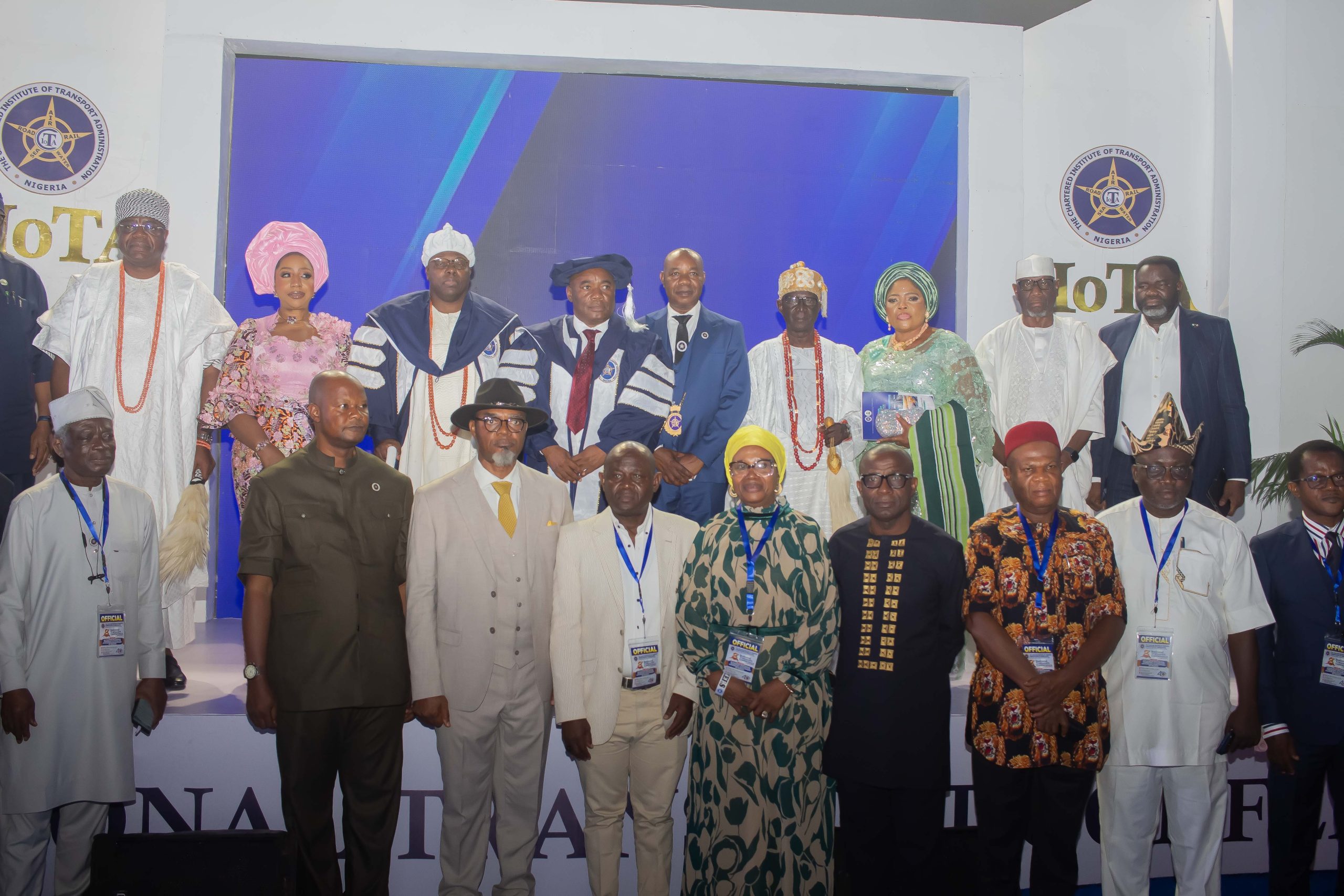
CIOTA President Prince (Dr.) Segun Ochuko Obayendo presented Honorary Fellowships to President Bola Ahmed Tinubu and to His Royal Majesty, Oba Abdulwasiu Omogbolahan Lawal (Abisogun II), the Oniru of Lagos (Iru Kingdom).
Among those who delivered goodwill messages was Dr. Boboye Oyeyemi, President and Chairman of Council, Chartered Institute of Logistics and Transport (CILT) Nigeria.
The conference ends tomorrow, with a communique expected at the close of deliberations.
By Olusemire Jegede