
NCAA pushes back against TSC review, warns of safety risks
- Aviation
- August 10, 2026
- No Comment
- 196

The Nigerian Civil Aviation Authority has thrown its weight against a proposed overhaul of the Ticket Sales Charge allocation, warning that slashing its share of the levy would cripple its ability to regulate the country’s aviation industry.
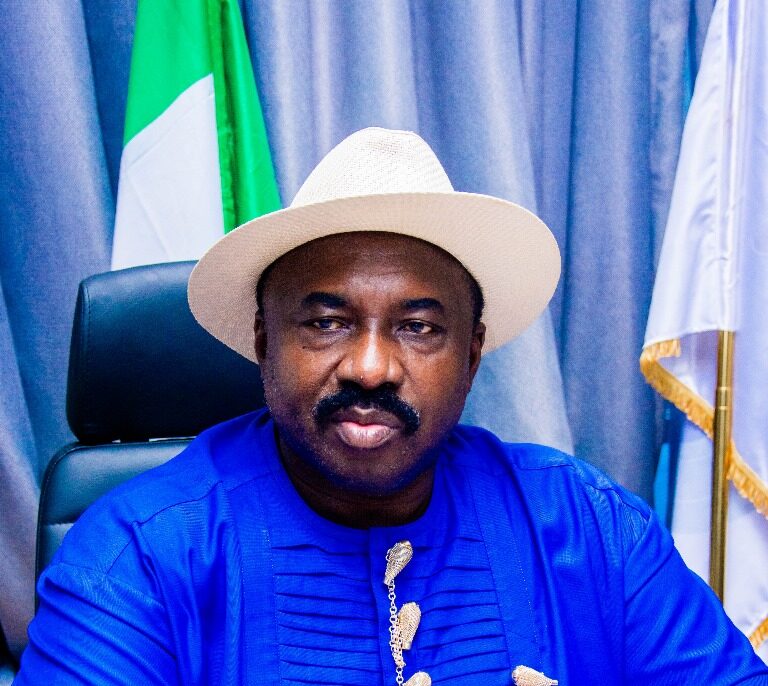
Director General of Civil Aviation, Capt. Chris Najomo, made the case before the House of Representatives Committee on Aviation during a public hearing in Abuja on Thursday. He argued that the TSC funds roughly 85% of the NCAA’s operations, covering everything from safety inspections and certification to licensing and surveillance, and that any reduction would directly compromise oversight.
“The Authority supports adequate funding for all aviation agencies,” Najomo said in a statement. “But any review of the existing revenue-sharing formula will weaken the NCAA’s capacity to effectively discharge its statutory regulatory responsibilities.”
The current formula splits the 5% levy as follows: NCAA receives 56%, NAMA 22%, NiMet 9%, NCAT 7%, and NSIB 6%. A proposed revision would bump NAMA’s share to 40% and cut the NCAA’s down to 40%, a shift Najomo argued would be disastrous.
He pointed to ICAO’s Doc 9082, which recommends that air navigation services be funded primarily by aircraft operators, not passengers. NAMA, he said, already generates significant revenue from commercial air navigation charges and should first look to optimise its own income, improve efficiency, and tighten governance before seeking a larger slice of the TSC.
“If additional funding is required for NAMA,” he added, “it should come from optimising its commercial revenue, improving operational efficiency, and strengthening corporate governance, while government support should be reserved for strategic infrastructure.”
His warnings were echoed by a chorus of former aviation chiefs. Capt. Musa Nuhu, former Director General of Civil Aviation, and Engr. Mahmud Ben Tukur, Nigeria’s Permanent Representative to ICAO, stressed that safety oversight rests solely with the NCAA and that treating the regulator on par with service providers could erode its independence.
“An effective aviation industry depends on a strong and adequately funded safety regulator,” they said.
Dr. Bernard Aliu, former ICAO Assembly President, and Dr. Harold Demuren, another ex‑DG, joined in virtually, reinforcing that the NCAA’s financial independence is non‑negotiable if Nigeria is to remain compliant with international safety standards.
The hearing comes at a time when aviation funding is already under the microscope. The Airline Operators of Nigeria recently opposed a planned warning strike by unions over alleged non‑remittance of the TSC, insisting the action was based on misinformation.
Beyond the allocation dispute, Nigeria continues to face pressure over the cost of flying. IATA recently named the country among those with above‑global aviation charges. AFRAA data for 2024 showed passengers departing Nigeria paid an average of $180 in taxes and fees, third‑highest in Africa for both international and regional travel. West Africa led the continent with average levies of $109.50 for international departures and $97 for regional flights, well above the continental averages of $68 and $59.05.
IATA also reported that Nigeria generated $62 million in airline ticket taxes in 2024, part of a $1.97 billion haul across Africa, adding to airline concerns that high charges are driving up operating costs.
For now, the NCAA’s warning is clear: cut the regulator’s funding, and you cut the safety net. Whether lawmakers will heed that caution remains to be seen.