
Nigeria Moves to Formalise Road Transport, Targets GDP Growth Beyond 1.56%
- Road
- September 21, 2026
- No Comment
- 36
By Olusemire Jegede
Nigeria’s road transport sector is set for its most consequential restructuring in decades, following a high-level stakeholder engagement convened by the Office of the Vice President on the Presidential Initiative on Road Transport Transformation.
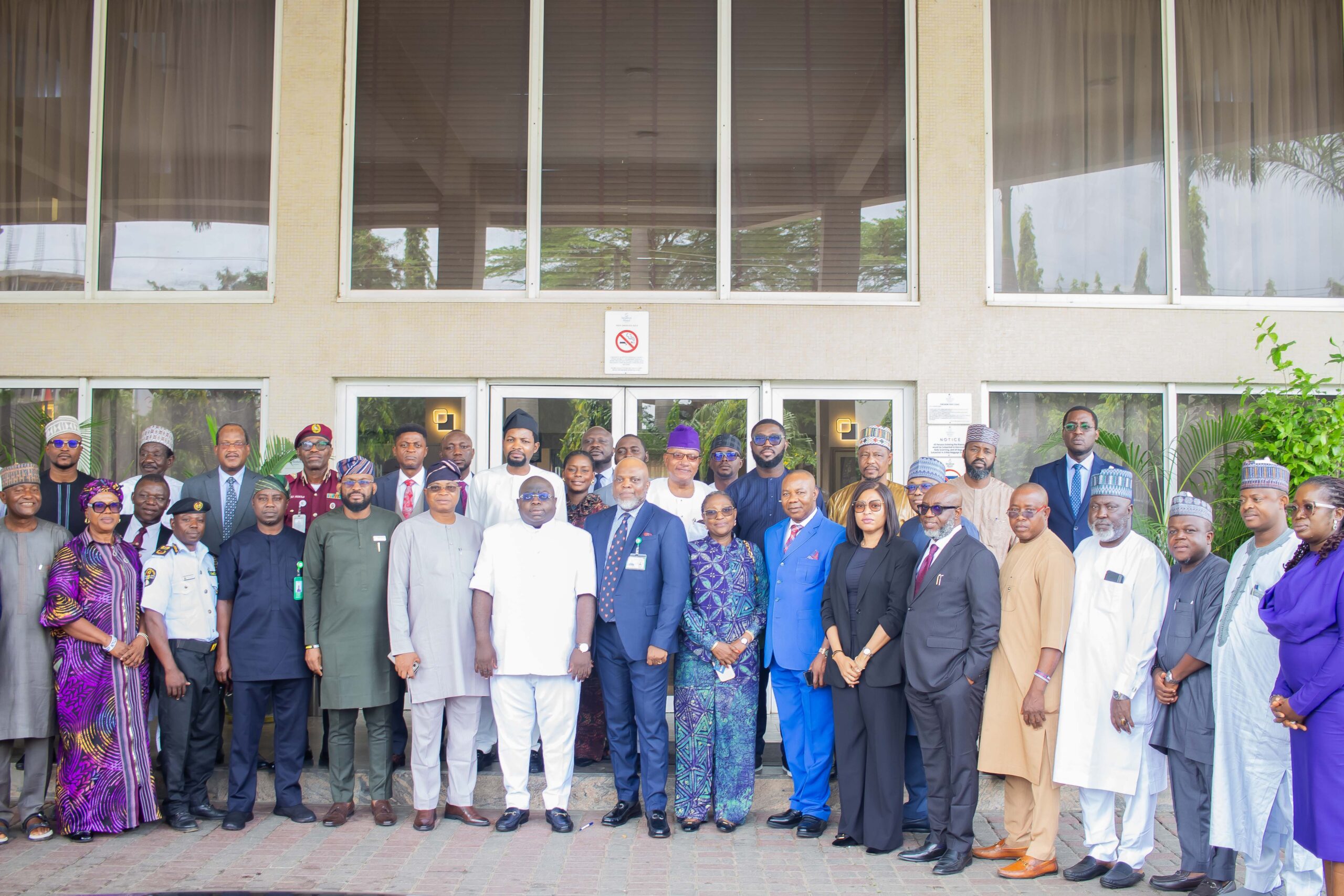
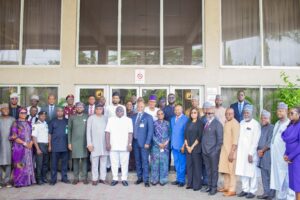
The meeting, held in Abuja on Monday, brought together federal ministries, regulatory agencies, transport unions, financial institutions and development partners under one roof, a convergence that signals the scale of what is being proposed. At the centre of the discussion was a single, uncomfortable statistic: road transport moves over 90 per cent of Nigeria’s passengers and freight, yet the transport and storage sector contributes just 1.56 per cent to GDP, according to figures cited repeatedly during the event.
Vice President’s Charge and Five Priorities
The event opened with Dr. Tope Fasua, Special Adviser to the President on Economic Affairs, representing Dr. Aliyu Umar Modibbo, Senior Special Adviser to the President on General Duties. Fasua conveyed the greetings of Vice President Kashim Shettima, describing transportation as a strategic enabler of national development, economic prosperity and social inclusion. He noted that the Vice President, as Chairman of the National Road Safety Advisory Council, is driving the transformation agenda in that capacity, and said the administration of President Bola Ahmed Tinubu is committed to converting the sector’s challenges into opportunities through modern infrastructure, institutional reforms, digital innovation, cleaner energy and stronger collaboration with states and local governments.
Fasua outlined five priority areas: road safety and professional driver development; digital vehicles, drivers, data and infrastructure; modernisation of the national road network; sustainable management of the private sector; and stronger coordination across federal, state and local governments. “We want to see an institution that transforms this sector of government, something that depends on partnership, shared responsibility and measurable implementation,” he said, urging stakeholders to contribute practical ideas and support the development of a national transportation roadmap. “On behalf of the Vice President, I therefore declare this stakeholder engagement officially open.”
From Informality to Formality: Lessons from Europe
Prince Segun Obayendo, Technical Adviser to the Vice President on Transportation, Logistics and Innovation, who convened the technical session, anchored the transformation agenda in a historical parallel. Germany formalised its transport sector in 1935, France followed in 1936 and the United Kingdom in 1937. From that day onward, he said, they contributed measurably to their gross domestic product, and Nigeria has now reached the point where its unions and associations must be enhanced, supported and given the wherewithal to do more.
The implication was clear: Nigeria is nearly a century behind. Obayendo also invoked a sharper historical echo, comparing the gathering to the Berlin Conference of 1831 to 1836, when a small group of people sat down and divided Africa. “They were not bigger than us here,” he said. “Today we are still contending with that meeting. So we are here today to determine the destiny of road transport.” He acknowledged the role of transport unions, particularly the National Union of Road Transport Workers, now marking its golden jubilee, which filled a vacuum the state left unaddressed for decades. “They felt the vacuum that we unintentionally created,” he said, drawing applause. “We are seated here to say that we can do better than 1.56 per cent of GDP.”
The Numbers Behind the Urgency
The case for reform rests on data that is both stark and, in places, dated. Forty per cent of commercial vehicles fail basic roadworthiness tests, and eighty per cent of crashes are traceable to human factors, according to figures presented by Obayendo at the event. The national road network stretches over 195,000 kilometres, but seventy per cent of it is rated poor or unreliable, according to the 2013 National Integrated Infrastructure Master Plan. The 195,000 kilometre network figure itself dates from a 2017 Infrastructure Conveyancing and Regulatory Commission report. Nigeria’s vehicular population exceeds 13 million, according to the Federal Road Safety Corps, though the National Bureau of Statistics has separately cited approximately 12.1 million. These vintage figures underscore a broader point made during the event: the country lacks current, reliable data on its own road infrastructure.
NARSAC at the Apex: No New Agency
A critical question hanging over the initiative was whether it would create yet another agency. Obayendo’s answer was direct: no. The National Road Safety Advisory Council, first inaugurated in February 2017 and re-inaugurated in October 2024 by Vice President Kashim Shettima, will remain at the apex of the governance structure, with the Presidential Initiative working in alignment rather than alongside it. “Rather than creating something parallel, we said let us put a structure together that will work in alignment with NARSAC because the goal is the same,” he explained. “Any transportation system that is not safe is as worthless as anything.”
The implementation model is deliberately lean. There will be no mass hiring. Instead, desk officers will be drawn from existing staff in every Ministry of Transport across the 36 states and the FCT, with an additional 774 desk officers sourced from the respective local governments. “We want to be all-inclusive as much as we can,” Obayendo said. “Whatever we agree here can be better cascaded to the grassroots.”
The Funding Barrier: Single-Digit Interest or Nothing
With the Central Bank of Nigeria, the Bank of Industry and the Development Bank of Nigeria in the room, Obayendo made a direct appeal for single-digit interest rates for fleet renewal and maintenance. “Anything other than that, going to 30 per cent or thereabouts, will be passed to the populace, and the populace will cry that they are paying too much in fares,” he warned. “We cannot totally blame the operators when commercial bank loans attract 30 to 33 per cent interest and demand multiple collaterals.” That structural barrier, he argued, explains why so many commercial vehicles on Nigerian roads are ageing, unsafe and environmentally harmful. Without affordable credit, operators cannot renew their fleets, and without fleet renewal, the safety and emissions crisis deepens.
Driver Licensing, Data, and the Missing Foundation
On driver testing and licensing, Obayendo pointed to Dubai’s point-based system as a model. “You break one traffic light, then a second, your licence is minus three, and before you know it, you are disqualified or sent to jail. It is that seriousness that we are appealing to all of us to change the narrative.” He called for theoretical, practical and health tests before licences are issued. On Intelligent Transport Systems, he made a point that resonated across the room: technology cannot function without data. “Before we can talk about intelligent transport system, we must ask: where is our data? Where is our interoperability?” He cited the FCT’s ITS experiment, which succeeded because the system operated 24 hours, recording vehicles as they passed. He also disclosed that the Presidential CNG Initiative has a lot in stock to share and plans to aggressively reach every part of the country with pocket-friendly conversion tools for commercial purposes.
Road Transport as a Bankable Growth Engine
Fasua later delivered the technical presentation titled Repositioning Road Transport Sector in Nigeria for the $1 Trillion Economy Target, in which he declared that the sector must be repositioned as a measured, bankable growth engine rather than merely the arterial system of the economy. His numbers told their own story: real GDP grew 4.43 per cent in Q2 2026, the fastest second-quarter growth in five years, according to the National Bureau of Statistics; the naira sits near a two-year high of about ₦1,330/$, according to CBN rates; external reserves are approximately $54.5 billion; and nominal GDP reached ₦119.3 trillion, up 18.4 per cent year-on-year.
But the $1 trillion target, he cautioned, requires roughly 24 per cent annual growth in dollar terms over five years, more than double current pace. The Ministry of Finance estimates 10 to 12 per cent annual growth is needed. Fasua laid out multiple scenarios: an IMF-consistent path of $496 billion by 2031, a Ministry path of $773 billion by 2030, a Reform case of $816 billion, a Ramp-up case of $906 billion, and a Stretch case of $1.045 trillion. Even if the headline date slips, he argued, a strong attempt still wins.
The paradox he highlighted was that road moves 90 per cent of passengers and freight, yet transport and storage accounts for only 1.02 per cent of real GDP, outside Nigeria’s top ten economic activities, behind trade at 17.9 per cent and crop production at 17.7 per cent. The value of delivered loads is booked in trade and agriculture, while the cost of poor roads, fuel and levies is carried across all sectors. Fasua proposed four shifts: take data seriously, cut the cost of moving goods, build new capabilities, and mobilise private capital. His plan includes tolling and concessioning four legacy corridors: Lagos to Calabar, Sokoto to Badagry, Calabar to Abuja, and Akwanga to Jos to Bauchi to Gombe, under a 30 per cent federal counterpart and 70 per cent loan model. A quarterly road scorecard, published alongside NBS GDP releases, would track progress.
Urban Mobility and the ₦500 Billion Question
Engr. Dr. Emmanuel Oche John, CEO of Ochenuell Mobility Solutions, brought a practitioner’s urgency to the funding conversation. His paper, Accessing Funding for Urban Mobility Development, painted a picture of a country urbanising faster than its infrastructure can absorb. Nigeria’s population stands at approximately 242 million, growing at 2.1 per cent annually, with 55.8 per cent living in urban areas, according to UN Habitat estimates. At least 19 cities now exceed one million residents, and 62 per cent of Nigerians are aged 24 or below. Yet only six to ten per cent of households own cars, and up to 90 per cent of vehicles on the road are used, according to NADDС 2026 data.
Dr. John proposed a five-year ₦500 billion National Urban Mobility Intervention Fund, a National Lead Agency for Urban Mobility, and state-level intervention funds with dedicated budget lines. He cited Morocco and India as reference models, noting that India’s programme mobilised over USD 1 billion through blended finance. His conclusion was blunt: “Money is not as much a problem as the governance framework and technical capacity. The consequences of inaction are worse than the price of action.”
NITT and the Technical Core
Dr. Sani Barau, Special Adviser to the Director General of the Nigerian Institute of Transport Technology, positioned the institute as the technical engine of the initiative. He identified three core problems: jurisdictional silos between federal, state and local tiers; weak enforcement leading to duplicate inspections and conflicting roadside mandates; and exorbitant logistics costs compounded by a shortage of certified manpower. “Fragmentation costs lives, revenues and opportunities,” Dr. Barau warned. “Time for a unified approach.” NITT’s mandate covers specialised curricula for transport logistics managers, fleet operators, regulatory officers and heavy-duty CNG technicians, alongside defensive driving protocols and vehicle inspection certifications.
LAMATA Keynote: A Blueprint for National Reform
Engr. (Mrs) Abimbola Akinajo, Managing Director of the Lagos Metropolitan Area Transport Authority, delivered the keynote address. Her message was grounded in Lagos’s experience: sustainable reform is achievable when government, operators, investors and development partners work together. She described road transport as the critical connector, linking homes to workplaces, farmers to markets, manufacturers to supply chains. The challenges, she said, are interconnected: inadequate infrastructure, crashes and fatalities, ageing vehicles, inconsistent standards, congestion, weak professionalism and high logistics costs. Integrated interventions, not isolated ones, are the only way forward.
Akinajo proposed a National Vehicle Entry, Safety and Environmental Compliance Standard, stronger maintenance and inspection systems, and the professionalisation of vehicle inspectors and roadworthiness technicians. She called for fleet renewal, cleaner fuels including CNG and biogas, electric mobility where viable, and improved fuel efficiency. On road safety, she urged that it become part of education and civic culture from a young age. On development partnerships, she insisted that every programme must build Nigerian capacity. “Infrastructure may be the project output; institutional capacity is the lasting legacy,” she said.
She called for a coherent national transport investment pipeline covering road safety corridors, vehicle inspection infrastructure, urban public transport, fleet renewal, logistics facilities, intelligent transport systems, digital platforms and clean mobility infrastructure. Success, she said, should be measured by outcomes: deaths and serious injuries, emergency response times, vehicle roadworthiness, driver compliance, public transport reliability, freight journey-time predictability, fleet renewal, private investment mobilised, and Nigerian human capital development.
The Nigerian Question
The presentation posed a question that will define the next two decades: if Germany, the United States, the United Kingdom, South Africa and China have developed integrated institutional frameworks to manage increasingly complex road transport systems, what should Nigeria’s governance architecture look like? The ask was simple: endorse the Initiative on Road Transport Transformation and constitute the multi-sector technical committee to review and propose this integrated framework. The final charge was equally direct: the road to a greater Nigeria is paved with action, and the Office of the Vice President has invited stakeholders to build it together.
What Happens Next
The initiative now awaits formal endorsement and the constitution of the multi-sector technical committee that will develop the integrated governance framework. Stakeholders also called for continuous technical consultation, the development of a sustainable funding and implementation framework, and the establishment of an inclusive steering committee where every stakeholder defends their interest. No timeline was announced for the committee’s first meeting or for the submission of its recommendations.
The Measure of Success
Vice President Kashim Shettima, who chairs the National Road Safety Advisory Council, set the standard by which the initiative should be judged: “The success of this initiative will not be measured by the number of meetings we hold, but by the number of lives we save, the efficiency of our transport system, the dignity we restore to transport professionals, and the prosperity we create for Nigeria.”