



From 24 Ships to None: How Corruption Sank Nigeria’s National Shipping Line
- Maritime
- April 1, 2026
- No Comment
- 1752
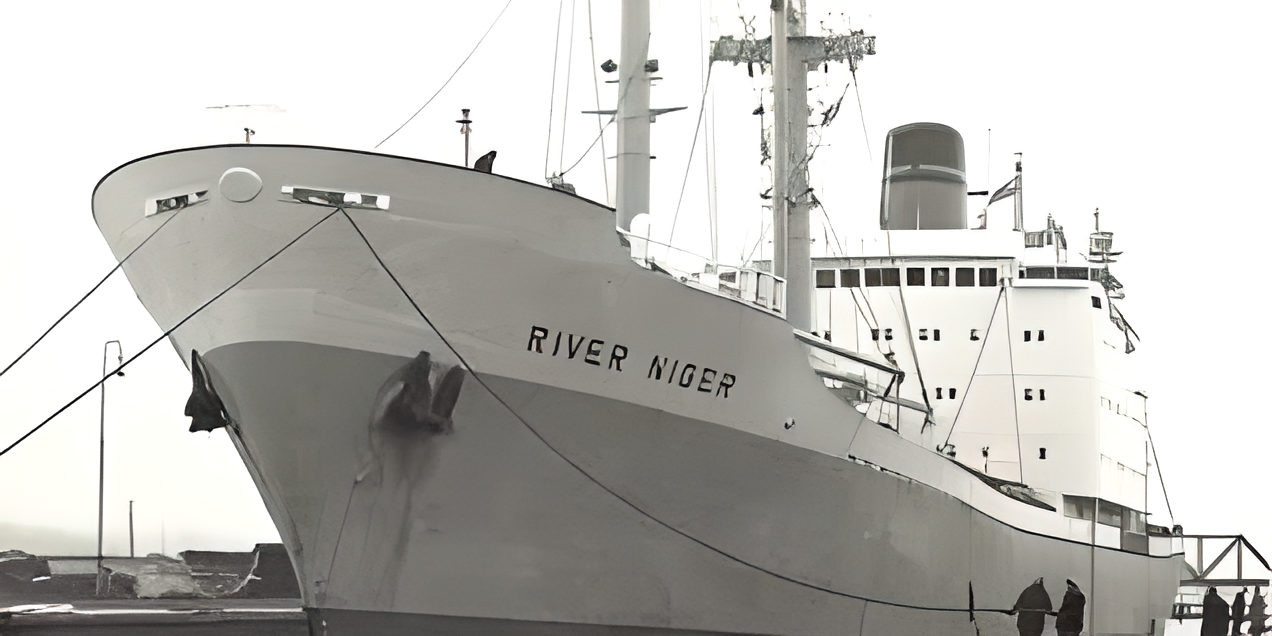
A viral video by Port Harcourt sailor @GodsgreatG tells the story of Nigeria’s once‑mighty national shipping line, which grew to 24 ships by 1964 but ended with nothing by 1995. This piece traces how corruption, political interference, and mismanagement brought down the Nigerian National Shipping Line and later gutted NigerDock, a shipyard that could have rebuilt the fleet. It’s a story of what Nigeria lost, and what it still pays for every year.
I stumbled on a post on X (formerly Twitter) which led me to the YouTube page of a Port Harcourt based sailor and YouTuber known as @GodsgreatG. The post, dated March 14, 2026, featured a 61 second trailer for his latest video titled “From 24 Ships To Nothing: Nigeria Once Ruled The Seas.” Intrigued, I clicked through and found myself drawn into a story of soaring ambition, breathtaking corruption, and a national loss that still costs Nigeria billions every year.
The clip opens with the bearded mariner in a casual studio setting, eyes intense, asking viewers: “Did you know that 60 years ago, Nigeria did not only just participate in global shipping, but in fact we owned it?” Archival footage flashes across the screen: black and white images of suited Nigerian officials shaking hands with foreign partners, then vibrant color shots of a fleet of ocean going vessels flying the green white green flag. By 1964, the post claims, the Nigerian National Shipping Line (NNSL) had grown to 24 ships. Today? Zero. The decline, the sailor insists, was largely driven by corruption and embezzlement. Ships were seized in foreign ports over unpaid debts; the national carrier was liquidated in 1995. The video has racked up views and shares, sparking heated replies about graft, privatization myths, and what Nigeria lost. This is the story behind the post, an economic tragedy that still echoes in Nigeria’s $5 billion annual bill for foreign shipping services.
The NNSL was born from post independence ambition. Established in 1959, just before Nigeria shed colonial rule, it began as a joint venture with Britain’s Elder Dempster Lines. The goal was clear: build maritime self reliance in a nation whose economy depended on exporting raw materials and importing finished goods. In 1961, the Nigerian government took 100 percent control. It started small, just three vessels, but the 1960s oil boom supercharged growth. By 1964, the fleet had exploded to 24 ships, making NNSL the largest black owned shipping line in the world. Routes stretched from Europe and North America to West Africa and Asia. At its 1980 peak, after deliveries of 19 new vessels ordered under military head of state Olusegun Obasanjo, the line operated 27 ships totaling over 200,000 deadweight tons. It was the pride of African maritime power outside apartheid South Africa.
These were no ordinary cargo haulers. NNSL vessels carried Nigerian crude, palm oil, cocoa, and groundnuts outward, returning with machinery, vehicles, and consumer goods. The line symbolized sovereignty. Nigerian seafarers trained abroad, gaining skills that once belonged only to expatriates. Ports in Lagos and Port Harcourt buzzed with activity. For a young republic, NNSL was proof that black Africa could compete on the high seas. As one maritime historian noted, it ranked among the most advanced technological enterprises any post colonial African state had attempted. Ghana’s Black Star Line and Egypt’s national carrier followed similar paths, but NNSL stood tallest.
Then came the rot. The sailor’s video traces the collapse with stark visuals: rusting hulls, empty docks, seized ships in European ports. Corruption did not happen overnight. It festered through political interference, bureaucratic mismanagement, and outright theft. Successive governments treated NNSL as a patronage machine rather than a commercial enterprise. Board appointments went to party loyalists with no maritime experience, often northern military figures or cronies who viewed the fleet as a personal ATM. Funds meant for maintenance, crew wages, and fuel vanished. Contracts for repairs or new builds were inflated or awarded to shell companies linked to elites. One former president later recounted how a single ship sold for half a million dollars, far below value, while proceeds enriched insiders.
By the late 1980s, the fleet had shrunk to 14 vessels. Maintenance was neglected; engines failed at sea; insurance lapsed. Debts piled up. Foreign creditors arrested ships in Liverpool, London, and Rouen for unpaid demurrage and port dues. In 1986 alone, six NNSL vessels were impounded in a single case involving $10.2 million. The government injected emergency loans, N70 million in 1986, then $56 million later, but the money disappeared into the same black hole. Embezzlement became systemic. Crews reported ghost employees on payrolls, phantom fuel purchases, and cargo diverted for private gain. One insider account described directors selling ship parts on the black market while vessels sat idle.
By 1992, only 13 ships remained operational. Deeply indebted and hemorrhaging cash, NNSL faced liquidation in 1995. All 21 remaining vessels were sold off at fire sale prices. The proceeds barely scratched the surface of accumulated debts. Successor attempts like the short lived National Unity Line with its lone MV Abuja fared no better. Privatization under later administrations promised efficiency but delivered more scandals. As former President Obasanjo bluntly advised in 2016, reviving NNSL would be futile: “Don’t revive this wreck.” He blamed lack of professionalism and high level corruption. Research from the Maritime Researchers and Authors Association of Nigeria (MARASSON) echoes this: weak financing, political meddling, diverted funds, and zero accountability doomed the line. Dependency theory scholars add context. Global powers preferred Nigeria as a raw materials exporter, not a maritime competitor, but internal sabotage accelerated the fall.
Yet NNSL was not the only casualty. Nigeria once boasted NigerDock, a world class shipyard in Lagos that could build, repair, and maintain vessels of substantial tonnage. For decades it was the backbone of the country’s maritime infrastructure, a place where Nigerian welders, fitters, and engineers honed skills that sustained the national fleet. Then it too was cannibalized. One man and his minions, through a web of privatization sleight of hand, asset stripping, and political cover, turned a thriving public asset into a personal enterprise. Equipment was carted away, contracts were inflated, and the yard’s strategic capacity was deliberately run down so that private interests could monopolize repairs and maintenance at exorbitant costs. By the time the vultures were done, NigerDock had been hollowed out, another monument to the same predatory culture that sank NNSL.
The human cost was devastating. Thousands of Nigerian sailors, dockworkers, and engineers lost livelihoods. Maritime graduates today struggle for sea time attachments because no national fleet exists to train them. Economically, Nigeria became a net importer of shipping services. Foreign lines like Maersk, MSC, and COSCO dominate West African routes, charging premium rates for what Nigerians once controlled. Annual capital flight exceeds $5 billion. Landlocked neighbors like Niger and Chad still route cargo through Nigerian ports, but the value leaks abroad. Strategic ports like Lekki Deep Sea Port sit underutilized for transshipment potential. As @GodsgreatG notes in his video, Nigeria’s Gulf of Guinea location is a natural hub. Deep water access could make it the distribution center for West and Central Africa. Instead, Benin Republic thrives on Nigerian overflow.
Public reaction to the X post reflects deep frustration. Replies lament systemic graft. “Corruption lives here,” one user echoed the sailor. Others debated state owned enterprises, citing successes like Saudi Aramco or Ethiopian Airlines against Nigeria’s failures, while insisting the problem is not ownership but Nigerian criminals who sabotage ventures. One thread highlighted privatization’s mixed record. “Gov’t can’t run any enterprise,” one person wrote, but others countered with examples of efficient Chinese or Brazilian state firms. Oby Ezekwesili, education advocate, flagged the video for her SPPG class on economic systems, calling it a teachable case study in failed beliefs and practices. The consensus was clear: poor leadership, tribal patronage, and short term greed turned potential into poverty.
Today, Nigeria has no ocean going merchant fleet under its flag. The dream of maritime sovereignty lies in rusting shipyards and faded archives. Yet the sailor’s video ends on a hopeful note. He outlines two reasons Nigeria could reclaim its place: geography and untapped potential. With visionary policy, private public partnerships, anti corruption safeguards, and skilled seafarer training, Lekki and Calabar could anchor a revived industry. Regional cooperation, perhaps a West African joint venture like the old Black Star NNSL model but privately managed, offers a path.
The NNSL saga is more than maritime history. It is a parable of post independence promise betrayed. From 24 proud vessels ruling the seas in 1964 to zero by 2026, the line’s fall mirrors broader national challenges: how resource wealth funds elite excess instead of infrastructure, how political interference strangles enterprise, and how unchecked corruption erodes sovereignty. The fate of NigerDock adds a bitter kola. When the shipyard that could have built a new fleet was itself devoured by the same men who feast on every public asset, the pattern became unmistakable. @GodsgreatG’s video and post are a wake up call, not nostalgia, but a demand for accountability. Nigeria once owned the waves. With honesty and competence, it could again. Until then, the ghost fleet sails on in memory, a warning that nations, like ships, sink not from storms but from rot within.
– Olusemire Jegede
