


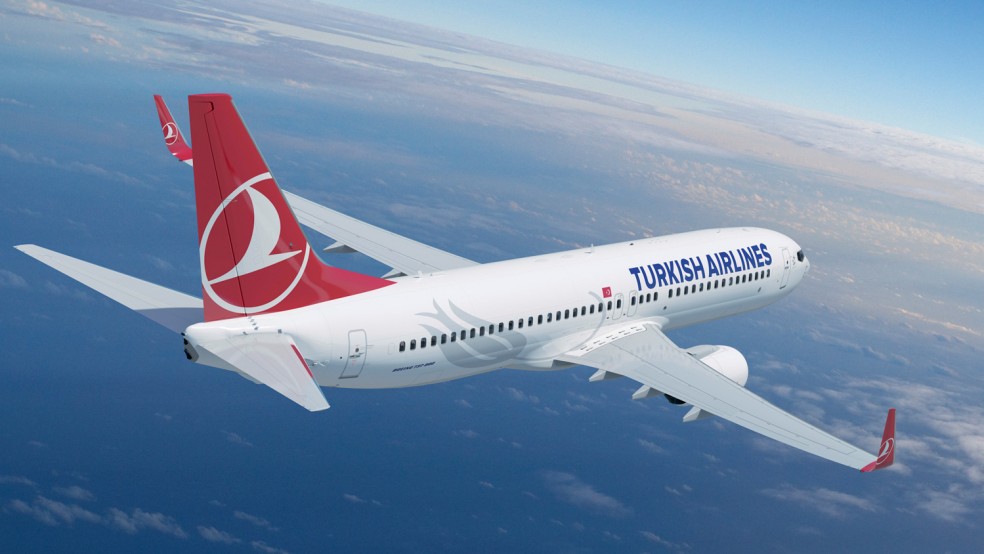

Boeing and Embraer Step Up Battle for Africa’s Aviation Future
- Aviation
- July 27, 2026
- No Comment
- 315

Aircraft manufacturers are sharpening their focus on frontier markets, tailoring products to the distinct needs of fast-growing regions. Nowhere is that scramble more evident than in Africa, where legacy carriers and nimble start-ups alike are mapping out fleet strategies to capture rising passenger demand.
Boeing has placed Africa at the centre of its long-term growth story. In its 2026 Commercial Market Outlook, the manufacturer names the continent as one of the world’s fastest-expanding aviation markets over the next two decades, propelled by urbanisation, a swelling middle class and expanding trade links. Together with China, South Asia, Southeast Asia, the Middle East and Latin America, these emerging regions will account for roughly 55 percent of all new aircraft deliveries through 2045, Boeing projects.
Globally, Boeing sees demand for 43,625 new commercial jets over 20 years, as passenger traffic doubles and the world fleet climbs from about 28,000 aircraft to more than 50,000. Half those deliveries will replace older planes; the rest will feed fleet growth.
Africa, while starting from a small base, remains one of the most significant long-term opportunities, the outlook argues. Single-aisle aircraft are expected to dominate, driven by expanding domestic, regional and short-haul international services linking African cities to Europe and the Middle East. Low-cost carriers are set to play a growing role in making air travel affordable. The forecast also pins hopes on the Single African Air Transport Market, saying liberalisation could unlock stronger fleet growth and better connectivity across the continent.
“Airlines are adapting quickly to manage near-term industry constraints while demand for air travel remains resilient,” said Brad McMullen, Boeing senior vice-president of commercial sales and marketing. “The industry’s long-term fundamentals continue to support sustained investment in newer, more fuel-efficient aircraft.”
Embraer is making a parallel pitch, training its sights on the underserved city pairs that criss-cross the continent. Its newly released Market Outlook 2026 projects African passenger traffic will grow at an average 4.4 percent a year between 2026 and 2045, making it the world’s third-fastest-growing air travel market after China (5.2 percent) and the Middle East (4.6 percent). That pace outstrips Latin America (4.3 percent), Asia Pacific (4.1 percent), Europe (2.7 percent) and North America (2.0 percent).
The Brazilian manufacturer’s global forecast calls for 8,500 new aircraft with up to 150 seats over the period, a market worth $650 billion. Africa is expected to take 370 of those deliveries, about four percent of the segment total—modest in absolute terms but a signal of the continent’s potential given its currently tiny fleet.
Embraer argues that future growth will depend less on large jets and more on right-sized aircraft that can serve thinner routes at higher frequencies. Mixed fleets, it says, allow airlines to open new markets, improve scheduling and lower emissions. The report ties aviation growth to broader economic shifts, pointing to battery plants in Sweden, automotive investments in Hungary and Mexico, and similar developments that have generated surges in regional air travel. The lesson: aviation follows regional economic activity, not just global hubs.
“Our family of E-Jets is ideally suited to ensuring that smaller communities maintain vital links to the world,” said Arjan Meijer, president and CEO of Embraer Commercial Aviation. For Africa, the manufacturer insists that better intra-continental links will require not just liberalised skies but aircraft that match the continent’s fragmented demand.
As flag carriers struggle, manufacturers are increasingly courting a new generation of smaller, agile African airlines, ones that are stitching together regional networks and driving growth in markets long left underserved.
