
“We Are Working the Talk”: Segun Obayendo on the CNG Push, Governors, and the Real Cost of Logistics
- Road
- September 2, 2026
- No Comment
- 299
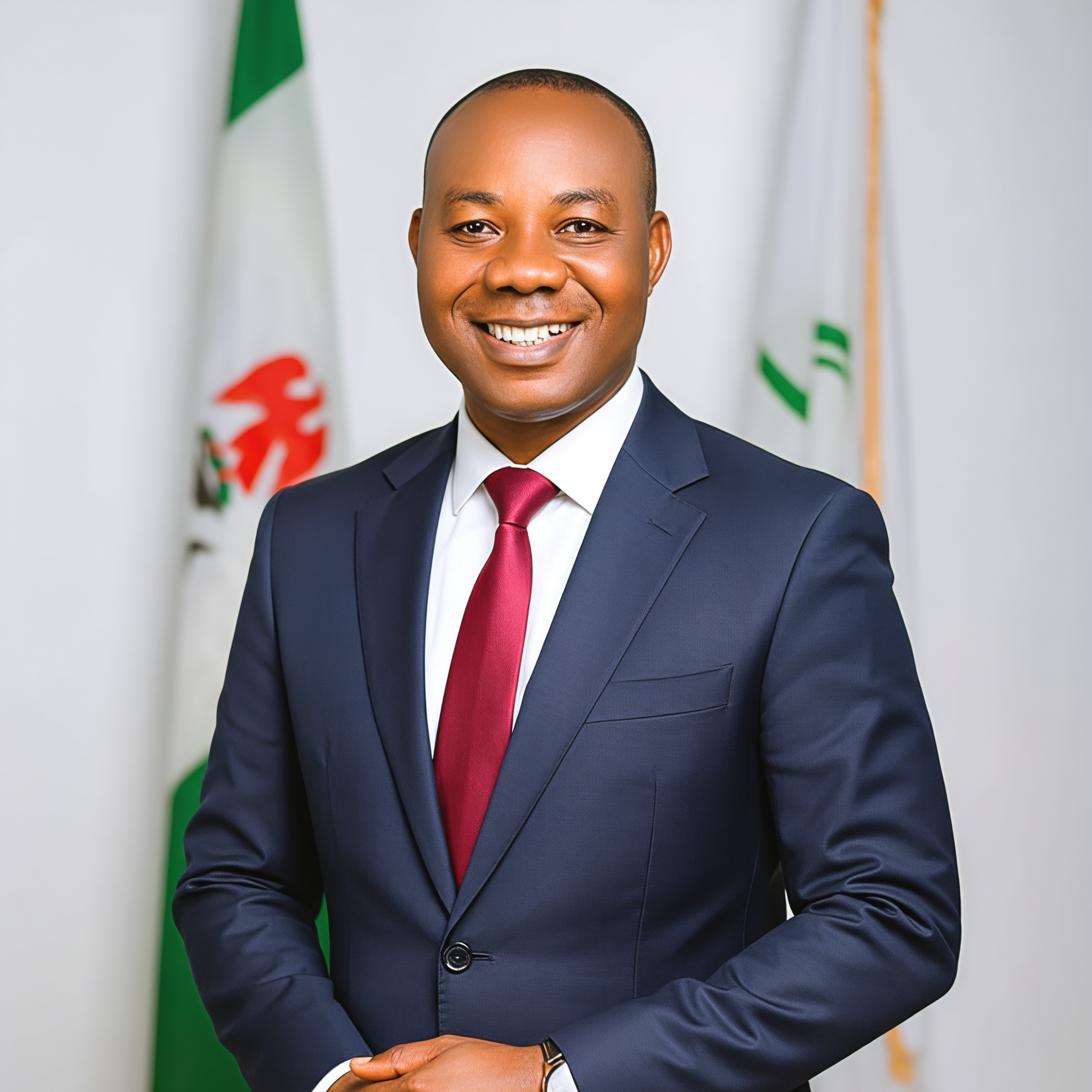
In a candid conversation on TVC’s Politics Tonight held last night, Prince Segun Obayendo, Technical Adviser to the Vice President on Transportation, Logistics, and Innovation, tackled the heavy lift behind President Tinubu’s call for governors to cut transport fares.
Obayendo did not shy away from the historical context. He noted that the removal of fuel subsidies, a policy attempted and abandoned eight times since 1988, has finally seen a courageous execution.
“Some of us felt, ‘At last, somebody is addressing what should have been addressed God knows how many years ago,’” Obayendo said. “For so long a time, every government would try, but by the time we go on the street and protest, they withdraw. It has been a step forward, two steps backward. He came in and made the announcement: subsidy is gone.”
The Governors’ Commitment and the Federal Leverage
Addressing the interviewer’s sharp question, why Nigerians should believe this latest commitment will yield a different result, Obayendo pointed to the political landscape. With the majority of state governors in the same political party as the President, the groundwork is laid for a unified approach.
“Everything begins with political will,” he said. “Mr. President engaged with the subnationals because we are a federation; to get things cascaded down to the grassroots, the subnationals are critical.”
He emphasized that the “talk” is already being worked. With the National Council on Transportation currently underway in Abuja, Obayendo confirmed that commissioners of transport across the 36 states have been engaged and are already putting their frameworks together. The goal is to ensure the initiative is not just an Abuja problem, but a state-level priority, supported by a tangible federal footprint.
From Policy to Infrastructure
The conversation moved from skepticism to measurable data. Obayendo who is also the National Coordinator, Transporters for Tinubu/Shettima 2027, revealed that the federal government is building infrastructure ahead of demand, with thousands of conversion kits already in the country.
“We are not just making statements for statements’ sake,” he assured. “We are making statements backed with reliable data and two to three years of experience. We have 120,000 commercial vehicles converted already, and we are working to get over a million converted in the shortest possible time.”
Simultaneously, the government is scaling the refueling infrastructure, motor and data stations, to ensure conversion and refueling are as seamless as possible by the president’s October 1st target.
The Real Bottom Line
Obayendo also made a compelling link between transportation policy and the high cost of living. He highlighted that Nigeria’s logistics costs currently stand at 16 to 17 percent, far above the global best practice of roughly 8 percent. Poor road networks exacerbate this; bad roads force operators to spend heavily on spare parts, which ultimately drives up prices for the masses.
CNG is just one facet of the administration’s broader plan to modernize transport. Turning to rail, Obayendo pointed out that moving 40-foot containers from Apapa to Ibadan via train takes the equivalent of over 40 trailers off the highways. This strategic shift offloads pressure from the road network, drastically improving the reliability and predictability of moving goods from rural production areas to urban markets.
“The way Nigerians will feel it in their pockets is when we see not much spent on refueling and not much spent on spare parts,” Obayendo concluded. “For you to make a fundamental change, every government deserves a second term. This is what the energy diversification and this campaign is all about.”
Prince Segun Obayendo is the Technical Adviser to the Vice President on Transportation, Logistics, and Innovation.
By Olusemire Jegede