
Nigeria’s CNG Future Hinges on Private Investment and Infrastructure, Stakeholders Declare at Maiden Summit
- Uncategorized
- November 3, 2026
- No Comment
- 36
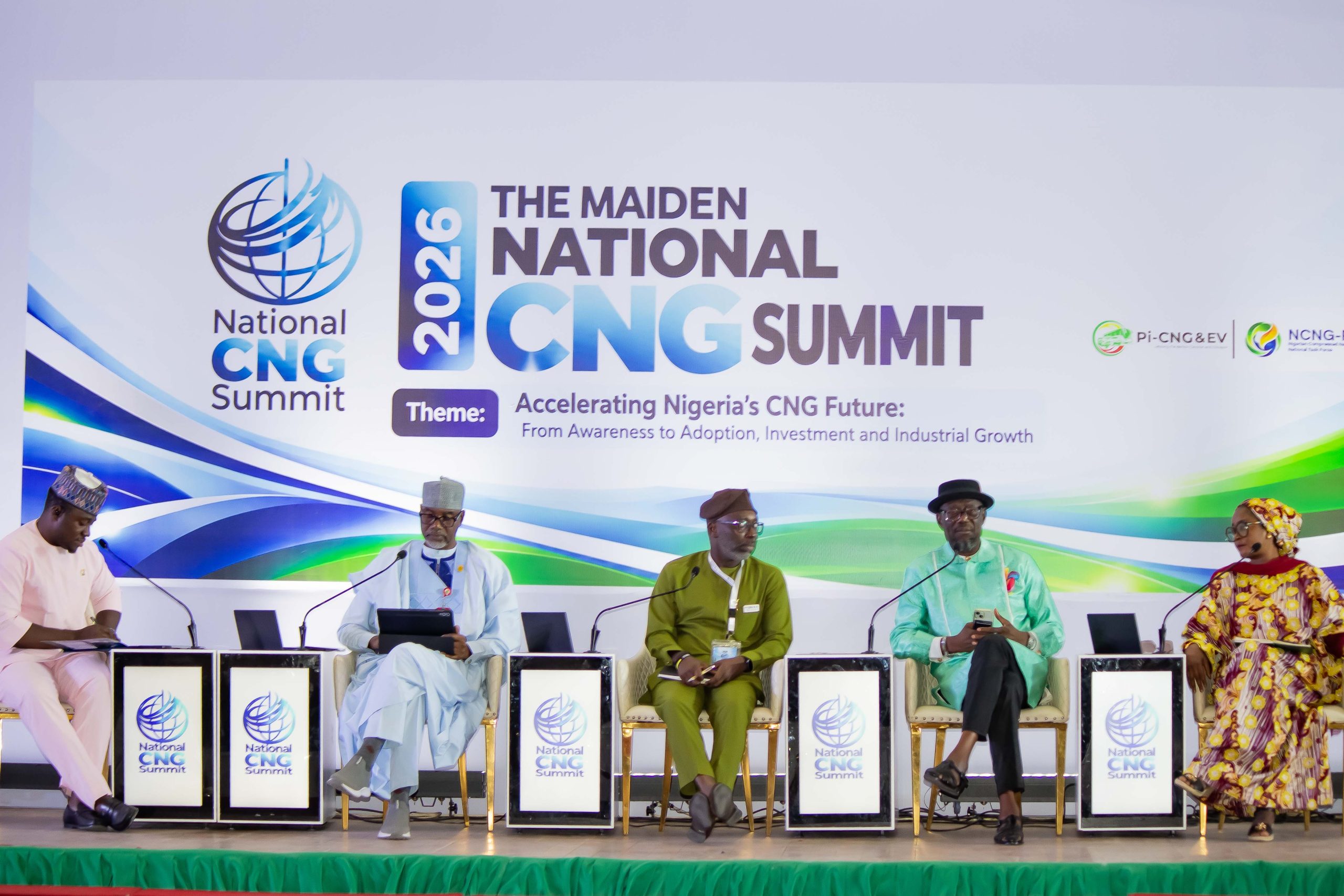
Stakeholders across Nigeria’s energy, transportation, and financial sectors have called for a decisive shift from policy rhetoric to concrete private-sector investment to drive the country’s compressed natural gas (CNG) transition.
The consensus emerged at the maiden National CNG Summit 2026 in Abuja, themed: “Accelerating Nigeria’s CNG Future: From Awareness to Adoption, Investment and Industrial Growth.” The event brought together government officials and industry leaders to tackle the long-standing paradox of Nigeria’s vast natural gas reserves juxtaposed with its slow transition to alternative fuels.
Delivering the presidential message on behalf of the Minister of State for Petroleum Resources (Gas), Rt. Hon. Ekperikpe Ekpo, who was away on an official assignment, the Technical Adviser to the Minister, Mr. Abel Igheghe, reaffirmed the Federal Government’s commitment to expanding domestic gas utilization. He noted that the Presidential Compressed Natural Gas Initiative (PCNGi), established in 2023, has been expanded to include electric vehicles to provide a coordinated framework for clean mobility.
Conveying President Bola Ahmed Tinubu’s message, Igheghe emphasized that the CNG expansion is a strategic economic development plan designed to cushion the impact of petroleum subsidy reforms. He challenged the private sector to take the lead in driving investment, while calling on financial institutions to develop innovative financing models for vehicle conversions and infrastructure.
Igheghe also stressed the need for local manufacturing and skills development. “We must not allow the expansion of the CNG market to become an opportunity that benefits only equipment importers and foreign suppliers,” he stated. He added that safety remains non-negotiable, urging regulators to enforce strict compliance and technical standards to maintain public confidence.
Echoing the need for a commercially viable ecosystem, Faruk Abdullahi, Convener of the summit and National Chairman of the National Compressed Natural Gas Forum (NCNGF), stressed that the true measure of the initiative goes beyond the number of vehicles converted.
“Behind every energy policy is a human story,” Abdullahi said. “When we discuss CNG, we are discussing the commercial driver whose daily earnings are consumed by the cost of fuel, the trader whose transportation expenses influence the price of goods, and the manufacturer whose competitiveness depends on affordable energy.”
He noted that while government intervention is crucial for initial catalysis, the long-term sustainability of the CNG ecosystem relies on transitioning to a self-sustaining industry capable of surviving political cycles. He highlighted that the NCNGF was established to unite conversion centres, marketers, and refueling stations to engage constructively with the government on industry challenges, including infrastructure financing and conversion affordability.
Uzodimma Ezemora, Vice President of Greenville Energy, highlighted the critical role of infrastructure in the transition, warning that energy adoption cannot outpace infrastructure availability.
“For CNG to become a truly national alternative, we must move beyond isolated infrastructure development,” Ezemora said. He urged the government to facilitate land access, support infrastructure deployment, and create investment-friendly regulations that attract private capital.
He added that the transition extends beyond cheaper transportation, offering a chance to develop indigenous technical capacity, deepen industrialization, and position Nigeria as a leading gas-powered economy in Africa.
As the summit concluded, stakeholders committed to translating discussions into measurable actions, with a unified resolve to build an ecosystem that makes CNG accessible, commercially viable, and dependable across Nigeria.
By Olusemire Jegede