
FG Moves to Divert Heavy Trucks to Second Niger Bridge Amid Persistent Gridlocks
- Road
- November 4, 2026
- No Comment
- 54
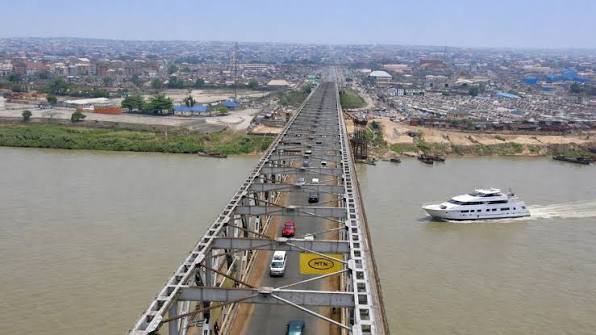
The Federal Government is considering restricting heavy-duty vehicles and trucks from the First Niger Bridge, diverting them to the Second Niger Bridge to alleviate persistent traffic gridlocks.
Timothy Emenike, the Anambra State Federal Controller of Works, disclosed this in an interview on Tuesday, noting that a physical barrier might be erected at both ends of the First Niger Bridge to enforce the restriction.
The gridlock has plagued the bridge connecting Onitsha, Anambra State, and Asaba, Delta State, since it was reopened on October 15. The bridge was initially closed on September 7, 2026, after the Minister of Works, Dave Umahi, discovered severe structural vandalism, including missing bolts, cut steel components, and damaged expansion joints.
Upon reopening, new concrete demarcations and medians were installed. However, these modifications narrowed the lanes, creating a bottleneck. Motorists and commuters have reported that broken-down trailers and heavy-duty trucks frequently become trapped in the tight lanes, completely halting traffic for hours.
Stranded motorists have criticized the new physical dividers, arguing that a breakdown in a single lane leaves no room for other vehicles to navigate.
A driver, who identified himself as Emeka, said, “Since the installation of the concrete demarcations, whenever a car, bus, or truck breaks down or stalls, it completely blocks that single lane, triggering severe traffic standstills. A single lane cannot accommodate two vehicles at a time.”
He added that the ministry had promised to provide towing vans at both ends of the bridge to remove broken-down vehicles but has yet to do so.
Another truck driver, Sanni, urged his colleagues to ensure their vehicles are in good condition before plying the road, but also called on authorities to provide towing vans. “Whenever a heavy-duty vehicle breaks down, it takes over the space on the single lane and prevents other vehicles from penetrating,” he said.
Responding to the complaints, Emenike defended the new road demarcations, stating they were designed to ensure ease of movement and were tested to allow two vehicles to pass at a time.
“The problem is that some drivers park intentionally and obstruct others’ movement whenever their vehicle breaks down,” Emenike said. “If a vehicle is in motion and a problem happens, the driver can at least narrowly clear the vehicle properly to allow other vehicles to move. But our people don’t clear off the road whenever they notice a fault.”
He explained that while a heavy-duty truck and a small vehicle can pass each other on one lane, two heavy-duty vehicles cannot.
“That is why the ministry is considering diverting the heavy-duty trucks to the Second Niger Bridge, which is wide enough to contain them,” Emenike said. “The Second Niger Bridge is wide enough to contain all of them, but we don’t know why that place is under-utilised.”
The Controller noted that the ministry is exploring multiple measures to ensure ease of traffic, especially as the Yuletide season approaches.
A civil servant, who identified herself as Amaka, agreed that the demarcations were a good development intended to curb bad driving habits. However, she urged the government to place barriers at both ends of the bridge to prevent heavy-duty trucks from plying it, to avoid solving one problem while creating another.