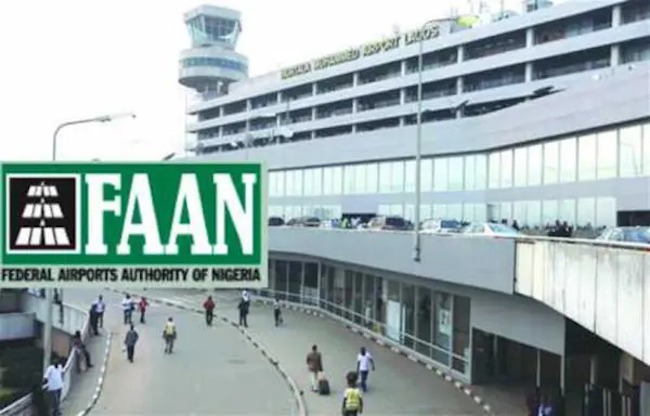

Former FAAN MD Outlines Structural Challenges, 2025 Performance in Nigeria’s Aviation Sector
- Aviation
- April 20, 2026
- No Comment
- 484

Former Managing Director of the Federal Airports Authority of Nigeria, Dr. Richard Aisuebeogun, has identified a range of structural constraints limiting the growth of the country’s aviation industry, even as he noted measurable progress in policy reforms and infrastructure investment during 2025.
Speaking in an interview while presenting an industry performance review, Aisuebeogun listed the sector’s persistent challenges as high operational costs, elevated jet fuel prices, multiple taxation, infrastructure financing gaps, slow project execution, limited aircraft availability, workforce and skills retention difficulties, and weak passenger demand driven by affordability constraints.
Aisuebeogun highlighted the role of the Nigeria Aviation Awards, which has served for 15 years as a platform for sectoral reflection and forward planning. He said the associated industry review document aligns with the policy direction of President Bola Ahmed Tinubu’s administration and provides stakeholders with a structured opportunity to assess performance trends, identify gaps, and propose actionable solutions.
“Aviation is inherently a long-term, capital-intensive industry that requires continuous review, reassessment, and strategic alignment. Without structured evaluation, progress becomes incidental rather than intentional,” Aisuebeogun said. He added that efforts are underway in collaboration with the Nigerian Civil Aviation Authority to institutionalise the review as an annual international reference document that bridges past performance with future planning.
Aisuebeogun described 2025 as a period of transition marked by policy reforms, infrastructure commitments, and renewed global engagement against a backdrop of unresolved structural issues. He cited advancements in aircraft leasing frameworks, planned redevelopment of key airport infrastructure, improved intermodal connectivity, and gradual enhancements in fleet and route capacity as notable gains.
Despite macroeconomic pressures including inflation and high operating costs, he said the sector demonstrated resilience, with growth in passenger traffic and sustained government investment. The Federal Government, he noted, has intensified reforms aimed at restoring investor confidence and regulatory certainty, resulting in strengthened NCAA oversight, improved compliance with international aviation standards, progress in resolving trapped airline funds, and a more robust aircraft leasing environment.
“These efforts have repositioned Nigeria as a more credible aviation market within the West and Central African region, though implementation challenges remain,” he said.
Infrastructure modernisation, he added, remains a central priority. Major terminals in Lagos, Abuja, Port Harcourt, Kano, and Enugu underwent varying levels of upgrades covering terminal rehabilitation, runway improvements, safety enhancements, and preparatory steps toward concession. However, he acknowledged that execution delays and coordination gaps slowed visible progress.
The industry experienced a 7.5 percent decline in capacity in 2025, which Aisuebeogun attributed primarily to high jet fuel costs, foreign exchange volatility, and limited access to affordable financing. Domestic airlines nonetheless demonstrated resilience, with emerging state-backed carriers including Gateway Air, Enugu Air, and Pioneer Airlines signalling renewed interest in regional connectivity. High airfares, however, continue to suppress demand.
Nigeria remains dominant in the West African market, with Lagos, Abuja, and Kano serving as key hubs. Lagos recorded 11.8 percent traffic growth in 2025, the fastest on the continent. Europe remains the largest market, while travel to the United States and Dubai declined due to visa restrictions.
Aisuebeogun expressed cautious optimism for 2026, noting that ongoing reforms in aircraft financing, airport concessions, and private sector participation are expected to attract increased international investment, particularly in leasing, maintenance and repair organisations, and airport infrastructure.
He warned that key risks persist, including foreign exchange instability, rising taxation, and high ticket prices affecting demand. Without coordinated policy intervention, these factors may constrain growth.
“Sustainable growth in 2026 will depend on policy consistency, efficient project execution, cost-reduction strategies, and stronger public-private collaboration,” he said. “If these elements are effectively aligned, Nigeria is well-positioned to strengthen its role as a leading aviation hub in Africa.”
Aisuebeogun concluded with a call for a comprehensive annual aviation review document and urged all stakeholders to contribute to the initiative.