LAMATA’s Journey-From Chaos to Coordination: The Lagos Transport Transformation” – Abike Akintuyi Awojobi
- Road
- June 12, 2025
- No Comment
- 685
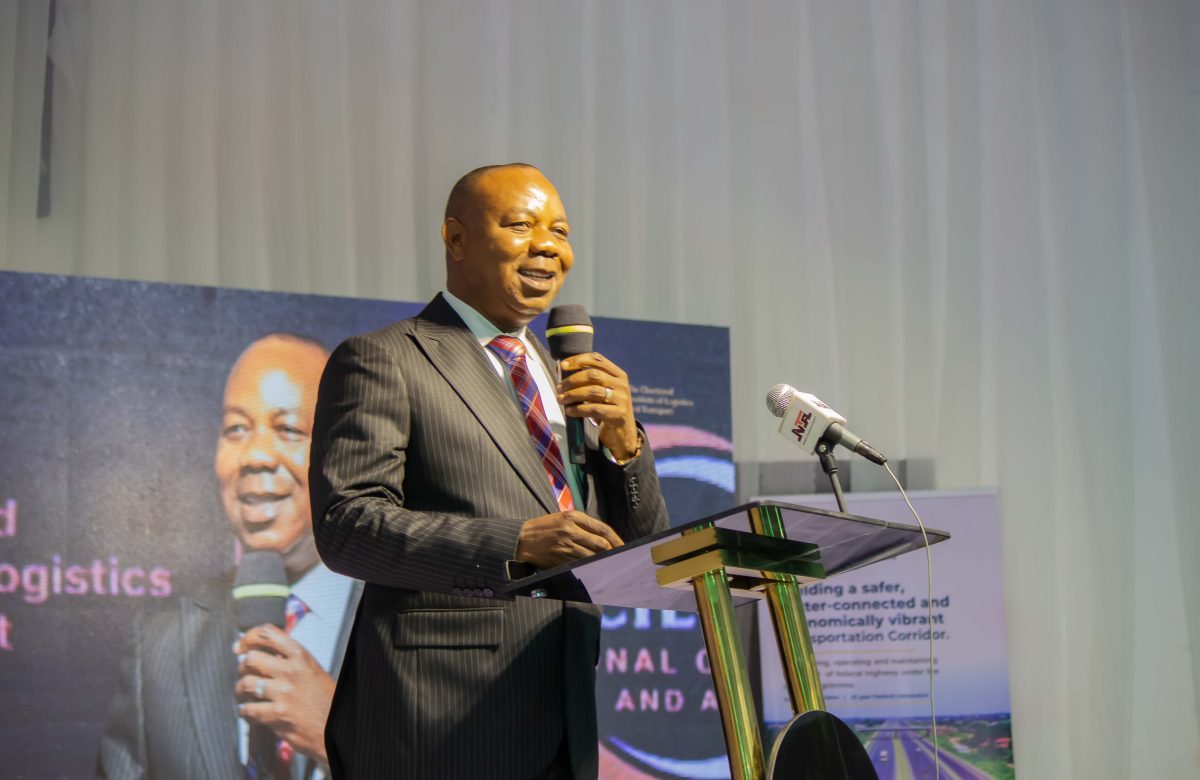
It wasn’t just another lecture on transport reform. At the Lagos State University (LASU), where policy often meets theory, Engr. (Mrs) Abimbola Akinajo, Managing Director of LAMATA, offered a compelling narrative that was part memoir and part roadmap, chronicling Lagos’ complex journey from traffic paralysis to a model of measured transport evolution.
The second lecture in the Endowed Professorial Chair on Transport and Logistics Lecture Series drew a rare kind of audience. Professors, public sector technocrats, private operators, policy students, and institutional stakeholders filled the hall, all keenly focused as Akinajo spoke—not from theory—but from the lived experience of reform.
What followed was not a technical presentation in the traditional sense. Instead, it emerged as a masterstroke in institutional storytelling.
Before LAMATA, Lagos was a city in motion without direction. With 22 million daily trips, largely by road, there was no coordinating authority or long-term vision. Akinajo brought the audience back to that chaotic origin story, one many in the room knew all too well.
What they perhaps hadn’t heard before, at least not with such clarity, was the rationale and design logic behind LAMATA’s creation. “We needed an authority not only empowered by law but grounded in strategic foresight,” she stated.
The presentation emphasized that the agency’s establishment in 2002, buoyed by World Bank support, was more than a bureaucratic reform. It marked a shift in how a mega city should think about, and respond to, its mobility challenges.
Where the paper truly resonated was in how it redefined transport, not as a standalone sector, but as a linchpin in sustainable development. Akinajo spoke of roads, rail, ferries, and even footpaths, but always with reference to people, climate, productivity, and inclusion.
As she unpacked the Lagos Strategic Transport Master Plan (LSTMP), the successes of the BRT system, and the emergence of the Blue and Red rail lines, murmurs of agreement swept through the audience. Yet, her message went beyond construction. It was about behaviour change, institutional reform, and public trust.
Throughout the lecture, sobering statistics provided context. For example, 97 percent of trips in Lagos are road-based, and the average public transport trip spans 9 kilometres. However, the real story, she suggested, lies in what the numbers fail to capture—the lost hours, the health consequences, and the socio-economic costs of a disjointed transport system.
These gaps became her springboard to argue for a transition from car-centric chaos to a harmonised, multimodal system. Rail, BRT, ferries, and non-motorised transport were not simply options; they represented the infrastructure of a functioning, modern city.
One of the more understated strengths of the presentation was how Akinajo positioned LAMATA as a rare example of successful transport reform in Africa. “We looked outward to cities like Bogota, London, and Curitiba, but acted inward,” she said.
This blend of international benchmarking and local adaptation struck a chord, especially with representatives from government and development partners. In a continent where transport initiatives often suffer from inconsistency and poor coordination, LAMATA’s continuity and credibility stood out.
Despite highlighting achievements, Akinajo focused significantly on the future. Within the audience, we look forward to plans for electric buses, inclusive design for women and people with disabilities, integrated land-use planning, and deeper community engagement. So while LAMATA’s journey is far from complete, her presentation served as a timely reminder that with the right mix of leadership, data, and strategic intent, even the most complex urban mobility issues can be addressed.